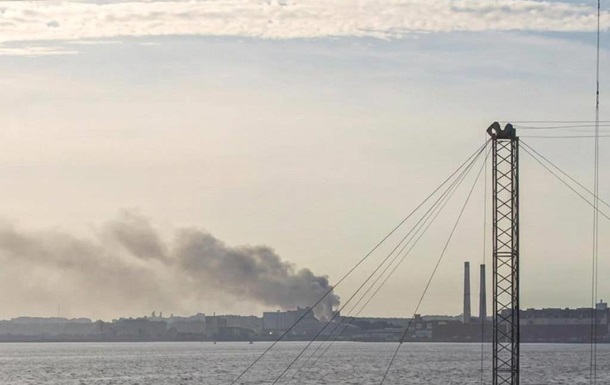
On the night of June 6, the Special Operations Forces (SOF) of the Armed Forces of Ukraine, in cooperation with the Unmanned Systems Forces and the Security Service of Ukraine (SBU), carried out a highly strategic long-range strike targeting the Russian Baltic Fleet’s naval base in Kronstadt, Leningrad Oblast, as confirmed by the military on their official Telegram channel. This operation marks a major milestone in Ukraine’s deep-strike capabilities, expanding the geographic scope of the conflict directly into Russia’s northern military strongholds.
Kronstadt, located near Saint Petersburg, has historically served as a core symbol of Russian naval power. The facility houses warships, submarines, training centers, repair docks, and vital shipbuilding infrastructure. Following Ukraine’s successful campaigns in the Black Sea, which severely degraded Russia’s Black Sea Fleet, the strategic importance of the Baltic Fleet in maintaining Russia’s naval logistics and military prestige had skyrocketed. However, the overnight attack, which saw Ukrainian drones traveling approximately 1,000 kilometers, demonstrated that no Russian military asset is beyond the reach of Ukraine’s defense forces. Multiple fires were reported on the base’s territory.
Simultaneously, Ukrainian long-range drones targeted the Russian Navy’s 15th Arsenal in the settlement of Velikaya Izhora, Lomonosov district, also within the Leningrad Oblast. The scale of the subsequent detonations forced local occupation authorities to initiate an evacuation of the nearby civilian population. This coordinated strike represents a deliberate effort to dismantle Russian military logistics at their source. Depleting ammunition stockpiles far behind the frontlines directly alleviates pressure on Ukrainian forces defending active combat zones.
The operations on June 6 extended beyond the St. Petersburg region. Overnight, air defense systems across several Russian federal subjects were overwhelmed. A major oil depot in Ust-Labinsk, Krasnodar Krai, caught fire after being hit, while in the temporarily occupied city of Mariupol, Ukrainian forces struck the local port, a key transit hub for Russian military logistics.
This wave of deep strikes underscores a shift in Ukraine’s asymmetric warfare tactics. By consistently hitting high-value strategic targets over 1,000 kilometers away, Ukraine forces Russia into a difficult dilemma: either leave critical industrial and military hubs unprotected or redeploy scarce air defense systems from the frontlines to defend its deep rear, thereby weakening its occupation forces.