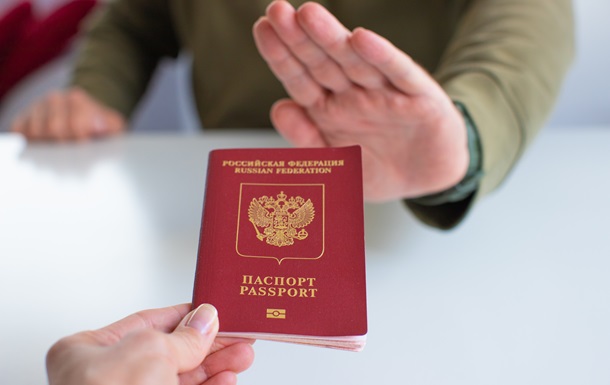
According to official data released by the European Commission, Schengen Zone countries issued 175.9 thousand multiple-entry visas to Russian citizens in 2025, representing a 20.4% decline compared to the previous year. This drop highlights the gradual tightening of travel restrictions across Europe following the suspension of the EU-Russia visa facilitation agreement. For comparison, Russians received 221.1 thousand multivisas in 2024.
The European Commission’s decision to restrict long-term, multi-entry visas forced Russian travelers to pivot towards single-entry options. This administrative shift explains why, despite the decline in multivisas, the total number of Schengen visas issued to Russians actually rose to 630.6 thousand in 2025, up from 552.6 thousand in 2024. The total number of visa applications also increased to 679.4 thousand, showing that the demand for European travel remains remarkably high despite the ongoing war and complex processing procedures.
A deeper geopolitical division is visible when analyzing how individual EU member states handle applications. Southern European nations continue to welcome Russian tourists. Italy led the issuance of multiple-entry visas with 80.7 thousand, followed by Greece (24.5 thousand) and France (21.9 thousand). In terms of total visas issued, Italy remained the primary gateway with 163.9 thousand, with France, Spain, and Greece following closely. These countries prioritize tourism revenues, balancing national economic interests against collective security concerns.
In contrast, Eastern European and Baltic states maintain a highly restrictive approach. The highest refusal rates in 2025 were recorded by Malta (19.9%), Estonia (18%), Romania (12%), Greece (11%), the Czech Republic (10.8%), and Austria (10.6%). Nonetheless, the overall rejection rate for Russian citizens slightly decreased from 7.4% to 6.4%, with total visa refusals dropping to 42.9 thousand.
Ultimately, Russian citizens remain among the largest global recipients of Schengen visas, ranking behind only China (1.73 million), Turkey (1.07 million), and India (966.5 thousand). This visa statistics review underscores the European Union’s fragmented policy towards Russia. While Eastern European nations advocate for total travel bans, Southern Europe continues to grant hundreds of thousands of entries, demonstrating that economic priorities still heavily influence EU immigration and security policies.