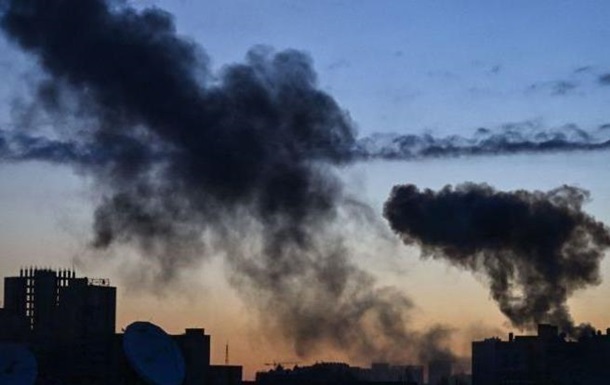
On the night of Monday, June 1, the city of Kharkiv once again became the target of a devastating Russian strike campaign, experiencing at least ten heavy explosions. According to a statement released by Kharkiv Mayor Ihor Terekhov on his official Telegram channel, initial reports pointed to a direct hit on a residential multi-story building in the Osnovyanskyi district. However, emergency services later clarified that the strikes targeted a garage cooperative adjacent to a heavily populated residential area, igniting massive fires that consumed private garages and civilian vehicles.
The attack, which also featured wave-like deployments of loitering munitions (drones) heading toward the city, resulted in injuries to several civilians across the Osnovyanskyi and Slobidskyi districts. The geographical proximity of these districts to the city’s bypass road suggests a calculated effort by Russian forces to strike peripheral logistical points and civilian infrastructure. Local emergency services responded rapidly to suppress the fires, preventing the flames from spreading to nearby high-rises and minimizing further casualties under the threat of secondary strikes.
From an analytical standpoint, these systematic assaults on Kharkiv represent a broader Russian military doctrine aimed at exhausting Ukrainian air defense assets and terrorizing the civilian population. Because Kharkiv is located less than 40 kilometers from the Russian border, the warning times for incoming missiles and drones are critically short. This proximity reduces the reaction window for regional air defense units, making the city a constant testing ground for Russia’s combined strike tactics involving ballistic missiles, guided aerial bombs, and Iranian-designed Shahed drones.
The deliberate targeting of non-military sites, such as residential garages and civilian infrastructure, underscores a strategy of attrition. Russia seeks to render Kharkiv uninhabitable, aiming to trigger mass displacement and break the social cohesion of one of Ukraine’s largest urban centers. However, the resilience of Kharkiv’s civil defense and the rapid response of municipal services continue to neutralize the psychological impact of these strikes. To secure the region and protect its civilian population, Ukraine’s partners must prioritize the deployment of advanced air defense systems capable of intercepting short-range threats.