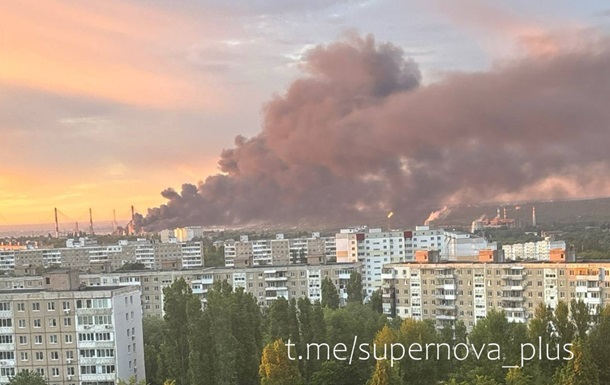
Over the past week, the Ukrainian Armed Forces have executed a series of highly coordinated, deep-penetration strikes targeting critical military and energy infrastructure inside the Russian Federation, spanning distances from 300 to 1,200 kilometers from Ukraine’s border. As confirmed by Ukrainian President Volodymyr Zelenskyy via his official statement on Facebook, these long-range operations represent a systematic enforcement of domestic “long-range sanctions” aimed at degrading the Kremlin’s logistical capabilities and war machine. The coordinated campaign involved the joint efforts of the Armed Forces of Ukraine, the Security Service (SBU), and military intelligence (HUR).
The geographic scope of these strikes indicates a significant expansion of Ukraine’s operational capabilities. Over the course of just a few days, targets were successfully hit across numerous Russian regions, including Yaroslavl, Ryazan, Voronezh, Volgograd, Rostov, Novgorod, Nizhny Novgorod, and Krasnodar. Among the most notable achievements was the precision strike against a major oil refinery in Saratov—located approximately 700 kilometers from the frontline—as well as military installations near the Caspian Sea and a naval base in Taganrog, which damaged several specialized aircraft and an Iskander-M missile launcher.
Military analysts point out that this systematic campaign against Russia’s energy sector forces Moscow into a severe defensive dilemma. To protect its sprawling domestic infrastructure, Russia must redeploy sophisticated air defense systems from the frontline in Ukraine to its deep rear. This dilution of defensive assets creates tactical vulnerabilities that Ukrainian forces can exploit on the battlefield. Furthermore, targeting Russian oil refineries severely hampers Russia’s fuel logistics, which are vital for maintaining the high intensity of its armored and offensive operations.
By utilizing locally manufactured long-range drones equipped with advanced navigation systems resilient to electronic warfare, Kyiv has successfully established an asymmetric response to Russian aerial terror. These operations demonstrate that Ukraine possesses the technological and tactical means to shift the theater of war onto Russian territory. Ultimately, this sustained campaign not only disrupts the supply lines of the occupying forces but also inflicts significant economic damage on Russia’s state budget, proving that no military or industrial target remains safe from Ukraine’s reach.