Over the past 24 hours, the Russian occupation army suffered massive losses on the front lines in Ukraine, losing another 1,560 military personnel killed and wounded. This was reported by the General Staff of the Armed Forces of Ukraine in its morning operational update. The total estimated losses of the enemy in manpower since the beginning of the full-scale invasion on February 24, 2022, have reached approximately 1,364,060 troops. This rapid surge in casualties underscores the relentless intensity of the ongoing defensive operations and Russia’s continued reliance on high-casualty frontal assaults.
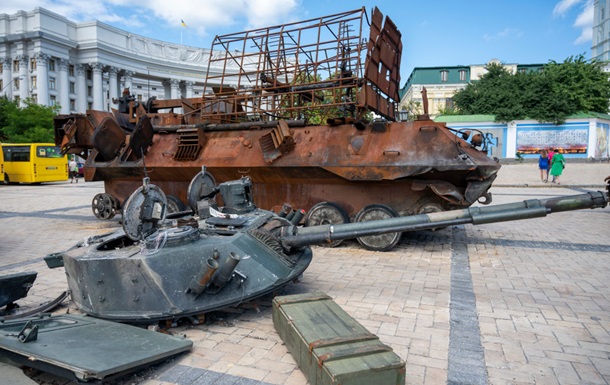
The destruction of Russian military hardware also reached significant numbers over the last day. Ukrainian defense forces managed to destroy 2 tanks, 14 armored personnel vehicles, and an impressive 57 artillery systems. Additionally, 1,894 tactical-level unmanned aerial vehicles (UAVs) were neutralized within 24 hours, proving that drone warfare remains the dominant tactical factor on the modern battlefield. The loss of 19 ground robotic systems also indicates Russia’s increasing attempts to deploy unmanned ground vehicles (UGVs) to compensate for human resource shortages, though with limited success against Ukrainian precision strikes.
Logistics and supply lines of the invading forces continue to suffer devastating blows. Ukraine’s military liquidated 524 vehicles and fuel tankers alongside 3 units of special equipment and 1 air defense system. These statistics reflect a deliberate Ukrainian strategy aimed at isolating the battlefield and depriving front-line Russian units of fuel, ammunition, and timely rotations.
Military analysts point out that the cost of territorial gains for the Kremlin remains catastrophically high. On average, Russia loses 254 soldiers killed and severely wounded for every single kilometer of occupied Ukrainian territory. In the highly contested Donetsk region, this grim metric escalates to 428 casualties per kilometer. Despite Moscow’s propaganda claims, these unsustainable attrition rates pose a severe threat to Russia’s long-term offensive capabilities, potentially forcing another wave of unpopular mobilization to maintain their current operational tempo.