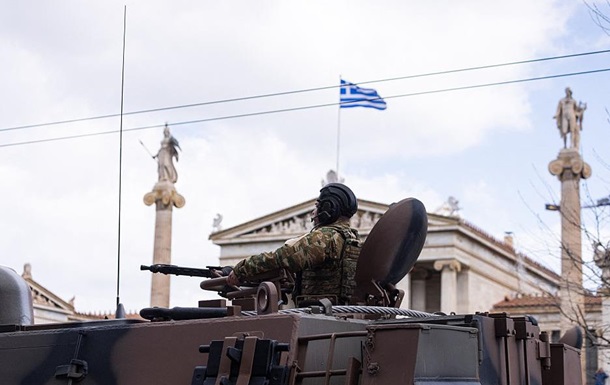
Amidst intense fighting along the frontline, Ukraine’s artillery capabilities have received a massive, previously unpublicized boost from Southern Europe. It has emerged that Greece has supplied Ukraine with significantly more artillery systems than was previously reported in international media. According to a detailed analysis by Defense Express, which references Greece’s official report to the UN Register of Conventional Arms, Athens has executed a major transfer of heavy weaponry via third parties.
Specifically, the report details the transfer of military equipment through the Czech Republic, which was ultimately destined for the Armed Forces of Ukraine. The shipment included 66 M110A2 self-propelled howitzers of 203 mm caliber. Prior to this disclosure, defense analysts estimated that only 60 units of this heavy artillery type would be sent. The delivery of 66 units means Greece has transferred more than half of its active fleet of M110A2 heavy howitzers. These high-caliber systems are highly valued on the battlefield for their sheer destructive power and are already deployed in active combat zones.
Additionally, the volume of 155 mm towed guns has also surpassed prior expectations. The UN registry documents the transfer of 68 M114 towed howitzers. Combined with approximately 70 units delivered between 2022 and 2024, the Ukrainian military has received a total of 138 M114 artillery pieces. This represents a substantial logistical effort, allowing Ukraine to maintain a steady rate of fire despite ammunition shortages and intense counter-battery combat.
The UN report also revealed a completely unannounced delivery of 56 M101 howitzers of 105 mm caliber. There had been no prior public indication of these systems being shipped from Greece. Due to their limited firing range, these 105 mm weapons are currently utilized primarily for training Ukrainian artillery recruits, preserving the barrels and operational life of more advanced Western artillery pieces for frontline duties.
This indirect transfer mechanism, largely facilitated by the Czech Republic, underscores the pragmatic and often confidential nature of European military assistance. By routing these deliveries through intermediaries, Greece successfully bolsters Ukraine’s defensive capacity while navigating complex domestic and regional geopolitical realities.