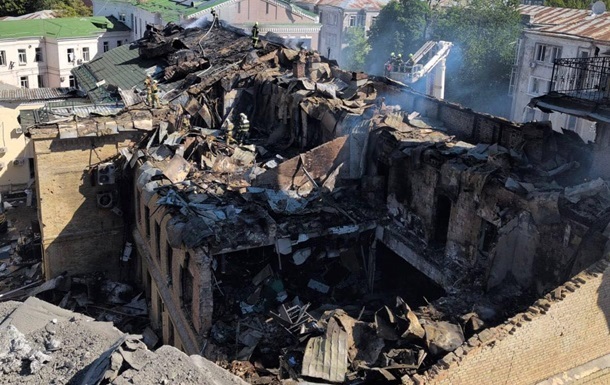
The Ukrainian National Commission for UNESCO has officially condemned the massive missile and drone strike on Kyiv that occurred on the night of May 24, as reported in an official statement. This calculated act of terror targeted the heart of the Ukrainian capital, reinforcing the reality that Russia is engaged in a war not just against the Ukrainian military, but against the nation’s cultural memory and identity.
The attacks resulted in significant damage to numerous institutions, including the National Art Museum of Ukraine, the Ukrainian House, the Kyiv Opera, and the National Library named after Yaroslav Mudry. Perhaps most egregious was the destruction of the National Chernobyl Museum, which saw invaluable historical artifacts lost to the violence. The National Commission for UNESCO highlighted that as of now, over 4,300 cultural and educational sites have been damaged or destroyed across Ukraine. The agency rightfully labels these actions as a deliberate state policy of cultural genocide rather than collateral damage.
In its address, the Commission called on the Director-General of UNESCO and all member states to move beyond rhetoric and immediately utilize international legal instruments to hold Russia accountable. The statement emphasizes that a state bent on erasing world heritage forfeits its moral and political legitimacy within international institutions. History has consistently proven that appeasing aggressors only emboldens them to commit further atrocities. By systematically obliterating monuments, libraries, and artistic centers, Moscow seeks to disconnect the Ukrainian people from their history. However, these attacks have only unified the international community in its demand for justice, as experts and global bodies begin to classify the targeting of heritage as a war crime requiring robust prosecution. Ukraine maintains that the protection of its cultural legacy is inseparable from its survival as a sovereign nation, and it continues to fight to preserve its soul against an enemy that views destruction as its primary tool of influence.