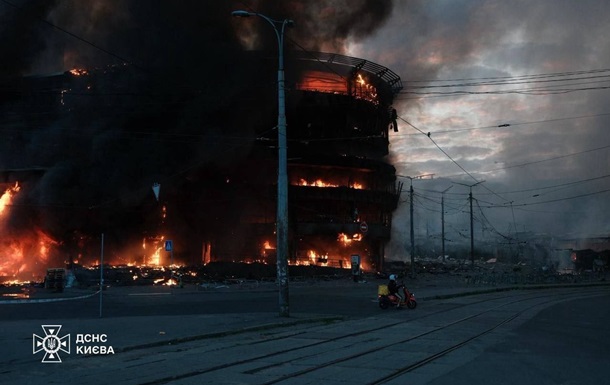
Rescue teams spent more than 15 hours battling fires caused by Russia’s massive combined strike on Ukrainian cities. As reported by President Volodymyr Zelenskyy, as of the evening of May 24, emergency crews were still engaged in dismantling hazardous structures damaged during the relentless shelling.
The scale of the destruction is devastating. In Kyiv alone, the number of injured has reached 81 people, including three children. Local authorities and police have received over 540 reports of property damage, ranging from residential buildings to vital urban infrastructure. This attack underscores the deliberate nature of Russia’s targeting of civilians, a strategy that consistently violates international humanitarian law.
The numbers provided by the Air Force illustrate the sheer intensity of the assault. A total of 690 aerial weapons were detected, including 90 missiles and 600 combat drones. Despite the successful interception of a significant portion of the incoming threats by Ukrainian air defense, at least 16 missiles and 51 drones struck 54 different locations across the country. The capital, once again, remained the primary target of the aggressor’s aggression.
The aftermath of such strikes is a harsh reminder that the threat to Ukrainian cities remains constant. Rescuers are working in hazardous conditions, often under the threat of secondary strikes, to ensure no one remains trapped under the debris. The international community is closely monitoring the situation, as Ukraine continues to call for additional air defense capabilities to shield its population from these systematic terror tactics. President Zelenskyy reaffirmed that the priority remains the safety of citizens and the prompt restoration of critical infrastructure destroyed by the Russian military. As the reconstruction process begins in the affected areas, the focus shifts to ensuring that Ukraine receives the support necessary to prevent further tragedies and hold the aggressor accountable for these war crimes.