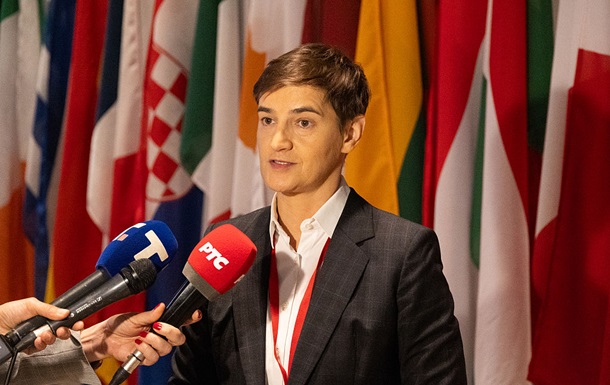
Serbian Parliamentary Speaker Ana Brnabic has signaled a significant departure from traditional rhetoric, stating that Belgrade no longer considers Russia a “brotherly nation.” Speaking at the GLOBSEC security conference in Prague, as reported by Nova.rs, Brnabic officially condemned the war against Ukraine as an act of aggression and a violation of international law.
Brnabic emphasized that interactions between Serbian President Aleksandar Vucic and Vladimir Putin do not represent a special alliance. She compared these contacts to the communication some EU leaders, such as Slovakia’s Robert Fico, maintain with the Kremlin, aiming to normalize her country’s diplomatic stance. Furthermore, she highlighted Serbia’s support for Ukraine’s territorial integrity, noting its vote to expel Russia from the UN Human Rights Council.
However, Belgrade remains cautious regarding sanctions. Brnabic cited the historical trauma of the 1990s, when Serbia (then part of Yugoslavia) suffered under international sanctions, as the primary reason for refusing to join the current sanctions regime against Russia. She noted that her people hold a deep-seated resistance to such measures, though she conceded that economic ties with Moscow are dwindling, with trade turnover currently lower than that with Bosnia and Herzegovina.
Serbia is concurrently pursuing deeper integration with Western security structures. In May, the country held its first joint military exercises with NATO, aimed at building cooperation within the “Partnership for Peace” framework. These actions indicate a shift, though it remains incomplete. While Serbia has been in EU membership negotiations since 2014 and has received significant financial aid, the bloc suspended payouts in April due to concerns over democratic backsliding and Serbia’s persistent ties to Moscow.
This evolution in Serbian foreign policy reflects the growing difficulty of maintaining a neutral stance in an increasingly polarized world. As Serbia faces pressure to align fully with EU democratic standards, the “brotherhood” narrative that once defined Belgrade-Moscow relations is rapidly losing its political currency, leaving Serbia at a crossroads between its historical past and a European future.