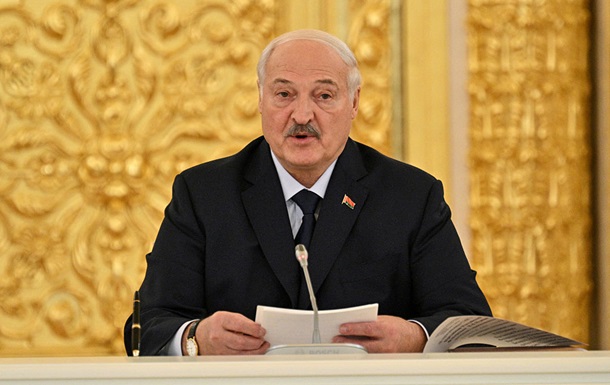
Self-proclaimed President of Belarus Alexander Lukashenko has recently reiterated his alleged openness to negotiations with Ukrainian President Volodymyr Zelensky, stating he is ready to meet “at any point.” These claims, reported by RBC-Ukraine, appear to be a tactical maneuver designed to mask Belarus’s deepening involvement in Russia’s military strategy.
The Office of the President of Ukraine has dismissed these overtures as meaningless, pointing out that Lukashenko’s words have historically carried no weight since the start of the full-scale invasion. While the Belarusian regime seeks to portray itself as a neutral mediator, it simultaneously hosts Russian military exercises, including the recent testing of tactical nuclear weapons delivery systems. This creates a stark contradiction: on one hand, rhetoric about peace; on the other, active participation in nuclear posturing that threatens regional security.
Lukashenko’s claim that Belarus will only enter the war if “aggression is committed against its territory” is a common trope used to deflect responsibility for the fact that Belarus serves as a staging ground for Russian forces. The joint military exercises with Russia, involving high-ranking officials and nuclear logistics, confirm that Belarus has lost its strategic autonomy. The “Brest to Vladivostok” rhetoric indicates that for Lukashenko, security is synonymous with total alignment with the Kremlin’s geopolitical goals.
Ultimately, these calls for dialogue serve two purposes. First, they allow the regime to attempt to regain a semblance of international legitimacy and influence in regional politics. Second, they function as an information warfare tool, designed to buy time while the militarization of the Belarusian border continues. For Ukraine and its Western partners, the contrast between Lukashenko’s words and the reality of his actions—hosting Russian nuclear hardware and military personnel—is clear. The focus remains on identifying these threats rather than engaging with empty diplomatic gestures that change nothing on the ground.