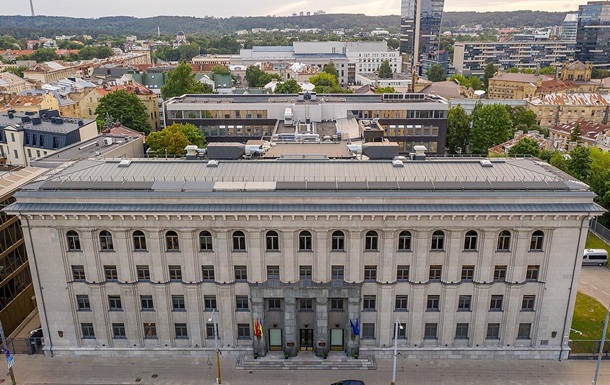
The Lithuanian Ministry of Foreign Affairs has firmly rejected the baseless accusations made by the Belarusian authorities. Minsk alleged that an Ukrainian drone, purportedly coming from Lithuanian territory, violated Belarusian airspace last week. This incident highlights the growing intensity of the hybrid pressure campaign orchestrated by the Lukashenko regime in coordination with Moscow.
On May 21, the Belarusian Foreign Ministry summoned the Lithuanian chargé d’affaires to protest an alleged incident on May 17, claiming that a Ukrainian “Chaika” drone was spotted near the village of Stanislavtsy in the Vitebsk region. According to Minsk, the drone was allegedly en route to a target in Russia but entered Belarus from Lithuania. The Belarusian side further accused Vilnius of failing to notify them of the threat.
Lithuania labeled these accusations as “absurd.” In an official statement, the Lithuanian MFA emphasized that the delivery of such a diplomatic note serves as direct proof of Belarus’s complicity in Russia’s aggressive war against Ukraine. Furthermore, it demonstrates Minsk’s role as a tool in Russia’s coordinated information warfare aimed at destabilizing the Baltic States. Vilnius maintains that these claims are part of a broader tactical pattern of regional provocation.
Regional security analysts suggest that this narrative is intended to distract from the domestic instability within Belarus while reinforcing the “besieged fortress” rhetoric favored by the Kremlin. As Russian influence in Belarus deepens, Vilnius continues to reaffirm its commitment to NATO’s collective security, noting that any real provocation against an alliance member would face a decisive response, including potential neutralization of threats originating from militarized regions like Kaliningrad.
The incident underscores the precarious nature of the current geopolitical climate in Eastern Europe. By generating artificial diplomatic crises, Minsk seeks to create pretexts for tighter integration with Russian military structures. However, Lithuania’s categorical rebuttal signals that Western allies remain vigilant against such hybrid tactics, refusing to be drawn into the fabricated reality constructed by the Minsk-Moscow axis. The integrity of Lithuania’s borders and its status as a reliable NATO member remain the primary focus of its government in the face of these ongoing destabilization attempts.