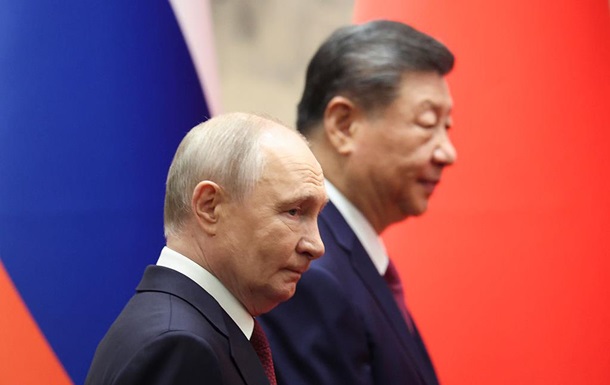
During his visit to Beijing, Russian dictator Vladimir Putin failed to reach an agreement with Chinese leader Xi Jinping regarding the construction of the ‘Power of Siberia-2’ gas pipeline, reports Financial Times. The project, promoted by Moscow for over a decade, was intended to be a strategic lifeline for Gazprom following its collapse in the European market. However, the Kremlin’s hopes for a swift deal were shattered by China’s pragmatic interests.
Kremlin spokesperson Dmitry Peskov admitted that certain ‘nuances’ remain unresolved. Despite the signing of 40 bilateral agreements during the visit, none of them concerned the major pipeline. This highlights the growing gap between Moscow and Beijing, where China’s economic pragmatism outweighs the ‘no-limits partnership’ rhetoric. For the Kremlin, this pipeline is vital, given that the Russian budget is facing severe pressure, with classified expenditures hitting historical highs.
The primary point of contention remains the price. According to sources, Beijing is demanding a price close to domestic Russian levels—about $50 per thousand cubic meters. This is nearly five times lower than what China currently pays for Russian gas and significantly less than what other foreign customers are charged. Essentially, China is exploiting Russia’s geopolitical isolation to dictate terms that strip Moscow of potential profit margins.
Currently, Russia exports 38 billion cubic meters of gas to China annually, which constitutes half of Gazprom’s total exports. In a desperate attempt to offset losses, Russia continues to strain its economic and military capacity, yet its diplomatic success in Asia appears increasingly hollow. Despite Moscow’s attempts to project power, it has effectively become a raw material hostage to Beijing.
Analysts suggest that even if the route for ‘Power of Siberia-2’ were finalized, the project is unlikely to be operational by the end of the decade. For the global energy landscape, this means that Russia’s pivot to the East is not a panacea but a trap. As long as China remains the only viable buyer, it will continue to leverage its market position to minimize costs at Russia’s expense, further complicating the Kremlin’s long-term fiscal stability while the cost of its war machine continues to rise.