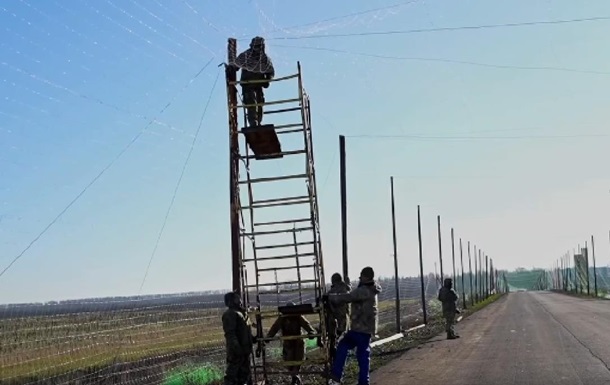
In the context of modern full-scale warfare, logistics and supply chain security are paramount. As Russian occupation forces increasingly rely on FPV (First-Person View) drones to target and disrupt traffic on frontline roads, Ukraine’s Defense Forces are implementing comprehensive countermeasures. To minimize these lethal threats, the State Special Transport Service, acting under the mandate of the Ministry of Defense of Ukraine, is systematically deploying extensive anti-drone physical defenses in the most vulnerable regions.
Mykhailo Fedorov, Ukraine’s Vice Prime Minister for Innovation, Education, Science, and Technology, shared an update on this strategic initiative via his official Facebook page. He emphasized that the enemy’s relentless hunting of both military hardware and civilian transport makes the construction of these physical barriers a critical necessity for survival and operational efficiency.
«The enemy actively uses FPV drones for strikes on transport and civilian vehicles. That is exactly why we are enhancing security and deploying anti-drone structures on key routes,» Fedorov stated.
Currently, significant attention is focused on the highly contested eastern front. Specifically, in two strategically vital directions within the Donetsk region, engineers are constructing over 25 kilometers of specialized anti-drone screens. The work is progressing at an impressive and steady pace of approximately one kilometer per day. Officials anticipate that these highly critical sections will be completely covered and shielded from hostile UAV attacks by the end of the current month. This proactive strategy is a direct response to the shifting tactics of the Russian forces, who increasingly target unarmored supply vehicles. Every kilometer of these defensive structures represents a critical investment in preserving the lives of Ukrainian citizens and safeguarding the vital resources needed for the country’s defense.
Protecting transport arteries in frontline and border zones is not a temporary fix but a systemic, nationwide effort. According to Fedorov, since the beginning of the year, Ukraine has successfully installed 371 kilometers of anti-drone infrastructure. This massive network spans seven regions that are frequently subjected to Russian aerial assaults: Kyiv, Sumy, Kharkiv, Dnipropetrovsk, Donetsk, Zaporizhzhia, and Kherson.
These innovative approaches are continually evolving. Earlier this year, officials announced a significant acceleration in the construction of protective netting across vulnerable border districts. For instance, in the Sumy region, engineers have been setting up «anti-drone tunnels.» These specialized structures utilize heavy-duty nets suspended over roadways, acting as a physical trap that intercepts and deflects incoming FPV drones before they can reach their targets.
Ultimately, these anti-drone barriers do more than just protect military convoys. They are essential for maintaining the daily operations and survival of frontline communities. By securing these routes, Ukraine ensures the continuous flow of humanitarian aid, safe medical evacuations, and the uninterrupted movement of civilian traffic in high-risk zones.