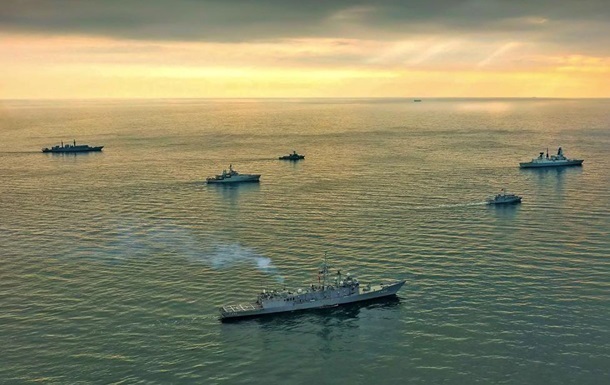
Russia has officially declared its exclusive economic zone in the Black Sea unsafe for navigation following a series of successful strikes on Russian-linked vessels. As reported by Bloomberg, citing a Russian Ministry of Defense bulletin, the threat of drone attacks now extends to approaches to major ports, including Novorossiysk, a critical export hub. This decision marks a significant escalation in the ongoing maritime conflict.
Military analysts compare the current situation to the “Tanker War” of the 1980s between Iran and Iraq, where both nations sought to cripple their opponent’s economy by targeting oil exports. According to the General Staff of the Armed Forces of Ukraine, at least 124 vessels linked to Russia were targeted in the Black and Azov Seas between July 8 and 20, including 89 tankers. These strikes have severely hampered Moscow’s ability to maintain its trade routes, forcing the Kremlin to reconsider its maritime logistics.
Simultaneously, Russia continues to launch missile and drone attacks on Ukrainian port infrastructure, specifically targeting Odesa and Chornomorsk. These provocations have led to the disruption of the Ukrainian maritime corridor, prompting Kyiv to request an emergency UN Security Council meeting scheduled for July 27 to address the growing threat to global food security. Despite the risks, Ukrainian forces maintain that these maritime operations are a necessary response to ongoing Russian aggression and the systematic blockade of Ukrainian trade.
The maritime landscape has evolved into a high-stakes arena where technological superiority—specifically the use of unmanned surface vessels—is proving decisive. As the international community prepares for the UN meeting, the world watches to see if Russia can secure its fleet or if the current “tanker war” will lead to a total collapse of Russian shipping in the Black Sea. The pressure on Moscow’s financial stability, already strained by domestic infrastructure vulnerabilities, is expected to intensify as the conflict at sea persists, turning the tide in favor of those capable of protecting their essential logistics lines while dismantling those of the adversary.