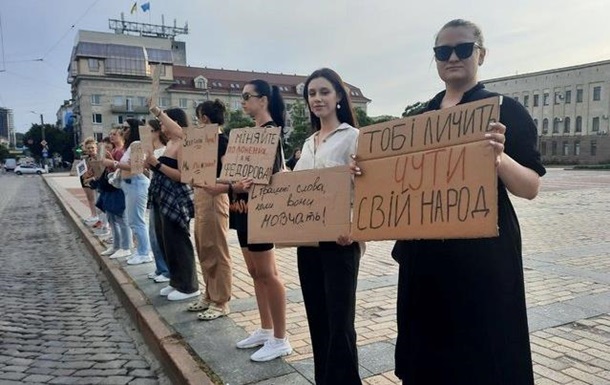
For the seventh consecutive day, mass protests have been taking place across Ukraine. According to Suspilne, citizens have gathered in Kyiv and other major cities to voice a singular demand: the reinstatement of Mykhailo Fedorov as Minister of Defense. Despite recent reshuffles in the country’s top military leadership, public engagement remains notably high.
In the capital, roughly 500 demonstrators gathered to protest the recent administrative changes. While the protestors welcomed the resignation of Oleksandr Syrskyi from the position of Commander-in-Chief of the Armed Forces of Ukraine, they insist that this is not sufficient to meet their expectations. Similar rallies were held in Lviv, Dnipro, Mykolaiv, and other regional hubs. Participants state that their protest is a peaceful exercise of democratic rights, aimed at ensuring that key positions in the security sector are occupied by officials who have proven their effectiveness in digital transformation and modernization.
Political analysts observe that the ongoing protests highlight the strong public trust in specific reform-oriented figures. The government’s decision on July 21 to appoint a new Commander-in-Chief and a new Chief of the General Staff was viewed as a move to stabilize the situation. However, the continuation of the demonstrations indicates a disconnect between the official policy and public sentiment. It is essential for the government to maintain open communication, especially during a time of war, to preserve social unity.
The situation serves as a reminder that institutional stability is paramount for the nation’s defense efforts. As the country focuses on securing international military aid and protecting its airspace, administrative transitions must be managed with high transparency to avoid fueling unnecessary instability. Whether the leadership will address the specific demands of the protesters remains to be seen, but the ongoing protests mark a significant moment in Ukraine’s civil-political landscape, reflecting the public’s desire to participate in shaping the nation’s strategic future during this pivotal stage of the conflict.