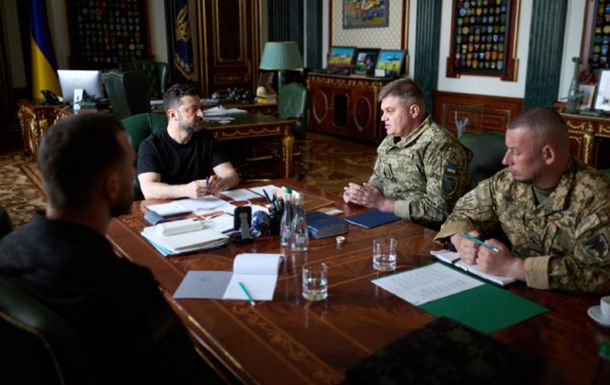
President Volodymyr Zelenskyy has convened a high-level meeting with military leadership to address shifting tactical threats and improve defensive mechanisms across key operational zones, as detailed on the official Telegram channel of the President. The agenda focused on readiness regarding potential Russian escalations on the northern borders, enhanced drone defense, and the deployment of additional air defense assets to the frontline.
The meeting included Acting Defense Minister Yevhen Khmara and deputy heads of the Presidential Office. A significant portion of the session was dedicated to briefings from commanders of various army corps, including the 9th, 12th, 14th, 15th, 16th, 18th, 21st, and the 30th Marine Corps. This coordination is essential for synchronizing efforts across the front as Moscow continues to seek new ways to stretch Ukrainian defensive lines.
Particular emphasis was placed on the defense of Kherson and the Dnipropetrovsk region, specifically the city of Nikopol. These areas remain under constant artillery and drone fire. President Zelenskyy stressed that strengthening frontline air defense systems is a non-negotiable priority to protect both soldiers and civilians from aerial terror. Intelligence reports concerning the Chernihiv-Kyiv axis were also reviewed, with the President noting that the government is prepared for a range of scenarios dictated by the adversary’s attempts to broaden the scope of the war.
Beyond immediate tactical adjustments, the meeting addressed the ongoing structural reforms within the Armed Forces of Ukraine (AFU). The President reiterated that the military must remain agile, incorporating lessons learned from the battlefield to refine the state’s long-term defense strategy. The command is currently prioritizing the integration of new technologies to counteract Russian drone swarms and surveillance capabilities.
As the conflict enters a challenging phase, these high-level discussions ensure that the military hierarchy remains aligned with the needs of frontline units. By analyzing enemy movements and logistical weaknesses, the AFU maintains a proactive stance against Russian aggression. The focus remains clear: securing the skies, protecting critical infrastructure, and ensuring that combat formations are fully equipped for any developments on the northern or southern flanks of the country. This systemic approach is part of a broader shift in Ukraine’s defensive architecture, aimed at sustaining military pressure while preparing for long-term operational success.