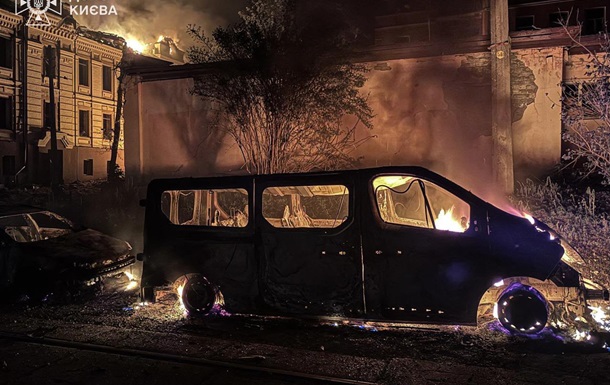
On the night of July 19, Russian occupation forces launched one of the most massive ballistic attacks on Kyiv, an event officially reported by President Volodymyr Zelensky. The aggressor deployed a complex combination of strikes, utilizing over 40 ballistic missiles of various types and approximately 120 attack drones. This coordinated assault highlights Moscow’s desperate strategy to overwhelm Ukrainian air defenses and inflict maximum damage on civilian infrastructure.
According to official reports, the strikes in Kyiv and the surrounding region resulted in casualties, with at least one person killed and sixteen injured. Over 600 rescue workers were immediately deployed to the impact sites to extinguish fires and clear debris. This brutal escalation confirms that the Kremlin has shifted to a strategy of high-intensity ballistic terror. By combining expensive missiles with mass drone swarms, the enemy aims to force a breakthrough in urban defense systems, causing fear and destruction among the civilian population.
President Zelensky highlighted the grim statistics for the week, revealing that Russia utilized nearly 1,450 strike drones, over 1,640 guided aerial bombs (KABs), and 99 missiles of various types. The attacks were not isolated to the capital; regions across the country, from Odesa to Sumy, were subjected to these relentless bombardments. Such figures demonstrate that the war has reached a stage where the aggressor is banking on the sheer exhaustion of Ukrainian air defense capabilities and the depletion of interceptor stocks.
In his statement, Zelensky emphasized that the survival of the Ukrainian people depends directly on the timely delivery of advanced anti-ballistic missile systems from international partners. Every delay in decision-making gives Moscow the necessary space to plan subsequent waves of destruction while simultaneously maneuvering around existing sanctions. The president expressed gratitude to all allies who take their supply commitments seriously, noting that these aid packages literally save lives during every major attack.
Beyond defensive measures, analysts suggest that continued pressure on the Russian military-industrial complex is essential. By attacking logistics and key economic infrastructure, Ukraine aims to limit the enemy’s offensive potential. The struggle for security is an ongoing priority, and as the intensity of Russian attacks grows, the urgency for a cohesive and rapid international response becomes the most vital factor in determining the outcome of this conflict. Protecting the skies over Ukraine remains the central pillar of national survival.