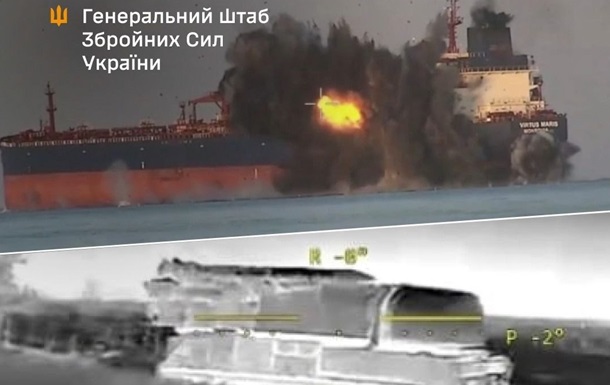
On the night of July 19, the General Staff of the Armed Forces of Ukraine reported a series of precise strikes against vital Russian military and logistical targets. These operations represent a strategic shift in the ongoing campaign to degrade the aggressor’s economic and military capabilities, effectively strangling the supply lines essential for their offensive operations.
The primary targets included two tankers in the Black Sea and a floating crane in the Sea of Azov. These were not merely merchant vessels; they served as integral components of the Russian military logistics network. The tankers were tasked with transporting fuel and lubricants to sustain the Russian armed forces, while the floating crane was essential for maintaining port operations and the unloading of military equipment. By neutralizing these assets, Ukraine has disrupted the enemy’s ability to maintain high-tempo supply chains in occupied coastal zones.
The precision strikes extended deep into the combat theater on land as well. Near Zelenopillia, in the Zaporizhzhia region, Ukrainian forces successfully destroyed a Russian ‘Buk’ surface-to-air missile system. The loss of such sophisticated air defense hardware degrades Russia’s ability to protect its own ground forces from Ukrainian aerial threats. Simultaneously, a key bridge near Novoekonomichne in the Donetsk region was struck, cutting off a critical route used by the Russian military for troop rotations and the reinforcement of frontline positions.
These actions are part of a broader, well-coordinated strategy aimed at isolating the front lines. Military analysts emphasize that the destruction of logistical nodes is as crucial as the attrition occurring on the front itself. By forcing the Russian military to divert resources to defend its rear infrastructure, the Armed Forces of Ukraine are actively hindering the enemy’s tactical flexibility. This systematic approach, focusing on the destruction of oil depots, bridges, and transport vessels, serves to degrade the overall combat readiness of the Russian occupation forces. The continued success of these strikes reaffirms that no point behind the Russian lines is safe from Ukrainian long-range capabilities, placing immense pressure on the Kremlin’s fragile logistics grid and shaping the future battlefield to Ukraine’s advantage.