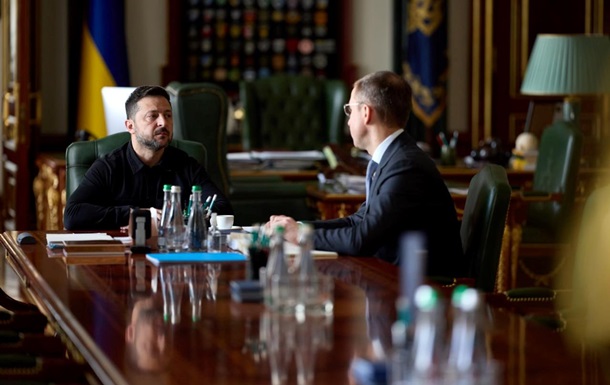
President Volodymyr Zelensky held a working meeting with the newly appointed Prime Minister Sergiy Koretsky, as reported on the President’s official Telegram channel. The discussion centered on the first steps of the revamped government and strategies for engaging with international partners to secure continued support for Ukraine. The President emphasized that the new administrative approach will be strictly pragmatic, with a focus on personal accountability for every minister and head of central government bodies.
Zelensky highlighted that the Prime Minister has already begun drafting a comprehensive government program to be presented to the Parliament and the public. “Sergiy has the full capacity to form a government policy and a team of central executive authorities capable of strengthening our state with additional forces,” the President stressed. This shift comes at a critical juncture, as the nation faces ongoing security threats that require both decisive military leadership and economic resilience.
A significant portion of the discussion was dedicated to the ongoing process of appointing acting ministers for the Ministry of Foreign Affairs and the Ministry of Defense. While the Verkhovna Rada successfully voted in the new cabinet on July 16, with 264 deputies supporting the motion, the formal nominations for these two strategic ministerial positions are still being finalized. The President’s emphasis on results-oriented leadership suggests that these selections will prioritize professional expertise to navigate the complex diplomatic and defensive landscapes of the war.
As the new government takes charge, the expectation is for a streamlined, performance-based management style that cuts through bureaucracy. With the government program pending, citizens and international observers are keenly watching to see how the new administration will address immediate crises, including energy stabilization and long-term infrastructure security. The appointment of Sergiy Koretsky and his team marks a pivotal moment for the executive branch, signaling a push for greater efficiency in the face of continuous existential challenges. The focus remains on strengthening state institutions to ensure that every task defined as a priority is executed with precision and urgency.