Russian forces have launched another brutal assault on Kharkiv and 23 settlements across the region, as officially reported by the head of the Kharkiv Regional Military Administration, Oleh Syniehubov. Over the past 24 hours, the strikes resulted in 18 injuries, including a child. This attack highlights the ongoing campaign of aggression aimed at destabilizing civilian life in eastern Ukraine.
The scale of the attack was devastating, involving a diverse range of weaponry. The enemy deployed three guided aerial bombs (KABs), five ‘Geran-2’ drones, eleven ‘Molniya’ drones, twelve FPV-drones, and 44 unmanned aerial vehicles of unknown type. This massive drone strike caused significant damage across Kharkiv city, impacting residential high-rises, administrative facilities, a movie theater, and local tennis courts. Outside the city, the damage is equally severe: fuel stations, medical facilities, railway infrastructure, and private residences in the Bohodukhiv, Kupiansk, Izium, and Chuhuiv districts were hit by Russian shelling.
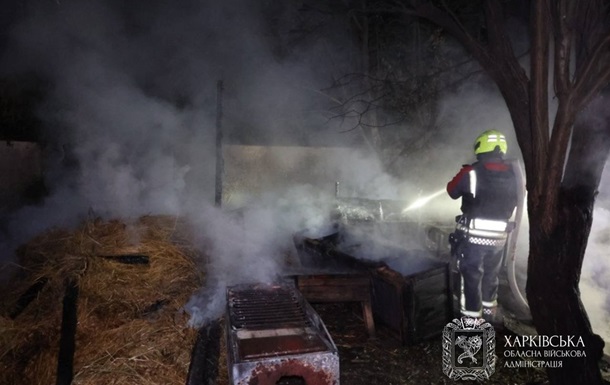
The State Emergency Service (DSNS) worked through the night to extinguish fires caused by the drone strikes in Kharkiv’s residential and park areas. Rescue teams noted that strikes targeted civilian households, sparking fires that required immediate intervention. Local officials have pointed out that Kharkiv has suffered from relentless bombardment for months. Previous reports suggest that nearly 10,000 residential buildings in the city have been damaged since the beginning of the full-scale invasion, with city authorities struggling to manage the reconstruction of thousands of these sites amid continuous shelling.
Analysts emphasize that these attacks are not isolated incidents but a systemic effort by the Russian military to destroy the socio-economic backbone of the Kharkiv region. By targeting civilian infrastructure, including utility grids and administrative centers, the aggressor aims to force mass displacement and create humanitarian crises. Despite the overwhelming firepower directed at the region, the resilience of the local population and the rapid response of emergency services remain critical in mitigating the impact of these strikes. International observers continue to categorize these actions as deliberate violations of humanitarian law, yet the shelling of populated areas remains a daily reality for the residents of Kharkiv.