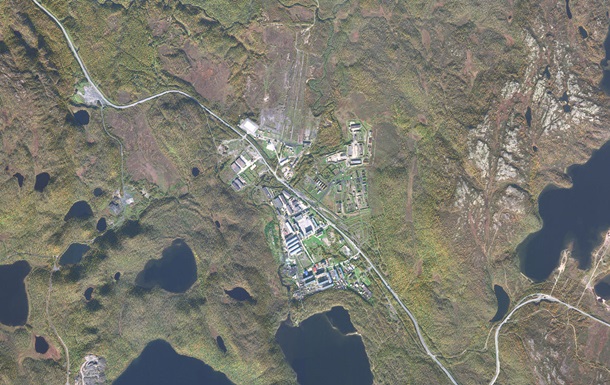
Russia is actively stripping its strategic Arctic defenses of advanced anti-aircraft systems to compensate for vulnerabilities elsewhere. According to Radio Free Europe/Radio Liberty, recent satellite imagery reveals that S-300 and S-400 missile batteries have been removed from critical installations in the Far North, including the Rogachevo airbase and industrial hubs in Severodvinsk where nuclear submarines are serviced.
This shift highlights a growing imbalance within the Russian military architecture. Unable to simultaneously secure the front lines, protect domestic industrial sites, and shield Moscow from persistent drone attacks, the Kremlin is prioritizing the survival of its political center. Over 100 air defense systems have been deployed around the capital since 2023, supplemented by specialized towers for Pantsir-S1 systems. Analysts note that approximately 60% of Russia’s strategic air defense batteries have been relocated from their permanent stations since the onset of the full-scale invasion of Ukraine.
Katarzyna Zysk, a professor at the Norwegian Institute for Defence Studies, suggests that while these regions are not left completely undefended, the removal of these systems signals that Russia does not anticipate a conventional military threat in the Arctic in the near term. Instead, the focus has shifted to reactive defense against asymmetric threats. By pulling assets from the front lines and strategic northern outposts to defend residential areas and state infrastructure, Moscow is essentially robbing Peter to pay Paul.
This strategic gamble underscores the severe strain on Russia’s military resources. As the effectiveness of drone attacks continues to test the limits of Russia’s air defense grid, the decision to leave long-range positions exposed for the sake of internal security highlights the Kremlin’s desperation. Ultimately, the constant movement of these systems reflects a state struggling to manage the consequences of a war that has reached deep into its own hinterland, rendering previously “impenetrable” zones increasingly vulnerable.