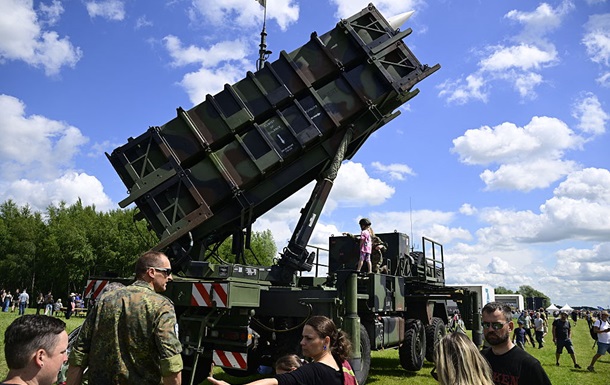
U.S. President Donald Trump’s pledge to authorize Ukraine to manufacture Patriot interceptor missiles has emerged as a significant political signal of support for Kyiv. According to a report by Reuters, while this decision marks a major strategic shift, military experts caution that the launch of domestic production will take significant time—likely no less than a year.
Analysts emphasize that constructing production facilities and establishing secure supply chains for complex components is a massive undertaking. Fabian Hoffmann of the Norwegian Institute for Defence Studies noted that implementation within 12 months would be an ambitious target. Consequently, in the immediate future, production will likely be outsourced to European partners, such as Germany, to ensure safety and operational reliability, while localized production within Ukraine remains a post-war objective.
The current air defense landscape requires immediate solutions. Ukraine faces a constant threat from Russian ballistic missiles, including the Iskander and Kinzhal systems. Because intercepting such threats often requires multiple Patriot missiles, Kyiv cannot rely solely on future domestic production to meet current operational needs. The government is continuing to negotiate for urgent shipments of existing PAC-3 stocks while simultaneously developing its own alternatives, such as the Freya air defense system.
The move to license production represents more than just industrial policy; it is a signal of the deepening defense partnership between Kyiv and Washington. By integrating Ukraine into the Western military-industrial complex, the U.S. is signaling a long-term commitment to Ukraine’s regional security. Despite the technical and logistical hurdles, this initiative is a crucial step in ensuring that Ukraine can eventually sustain its own defensive capabilities independently. As technical teams work through the details of the agreement, the focus remains on balancing immediate battlefield requirements with the strategic necessity of long-term technological sovereignty.