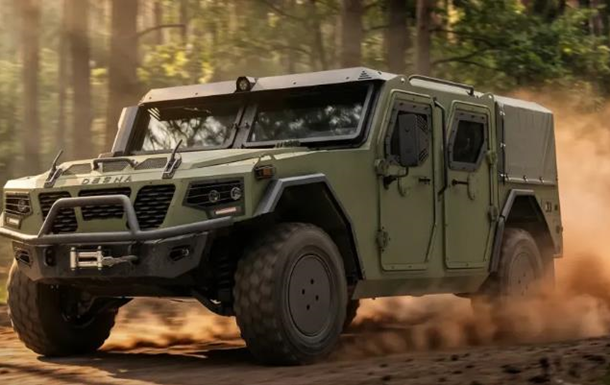
The Ukrainian Ministry of Defense has officially codified and cleared the multi-purpose armored vehicle UAT.DESNA for use by the Armed Forces, as reported by the ministry. This new vehicle, developed by domestic engineers, is designed to serve as a versatile tactical transport for infantry, filling the critical gap between light non-armored pickup trucks and heavy-duty MRAP (Mine-Resistant Ambush Protected) vehicles.
The UAT.DESNA is conceptually inspired by the American HMMWV but features a chassis engineered specifically for the harsh conditions of the current battlefield. Standing only two meters tall, its compact profile enhances both stability during high-speed maneuvers and concealment in terrain. Despite its relatively modest size, the vehicle is robust, capable of reaching speeds up to 110 km/h and traversing water obstacles up to 70 cm deep.
Key technical specifications include a payload capacity of 1.5 tons and a cabin configured for a driver and four infantrymen. Unlike civilian-converted vehicles, the UAT.DESNA utilizes a specialized modular military architecture, which includes an automatic transmission and enhanced ergonomics. This approach provides a superior balance between mobility, protection, and maintenance feasibility, addressing the urgent needs of frontline units operating in diverse tactical scenarios.
The integration of UAT.DESNA into the Ukrainian military supply chain follows a broader trend of accelerating domestic defense procurement. In 2025 alone, the volume of specialized armored vehicles supplied to the Armed Forces has surged by 25% compared to the previous year. While MRAP-class vehicles remain the primary focus for mine protection, the addition of the UAT.DESNA provides the logistical agility required for quick tactical movements outside direct engagement zones.
By prioritizing the development of platforms like the UAT.DESNA, Ukraine is steadily reducing its reliance on foreign military aid for light vehicle needs while bolstering its internal military-industrial capabilities. This move reflects a broader strategic shift toward localized production that can be rapidly adapted to meet the shifting demands of modern hybrid warfare, ensuring that troops on the ground have the protected mobility they require to perform their missions effectively under fire.