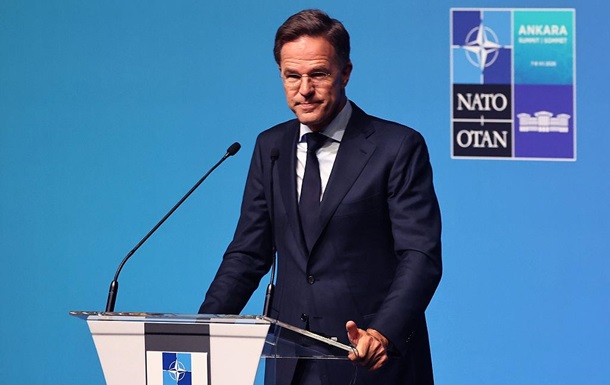
The recent wave of massive missile and drone strikes against Ukraine is clear evidence of Vladimir Putin’s desperation, according to NATO Secretary General Mark Rutte. Speaking at a press conference ahead of the NATO summit in Ankara, reported by Interfax-Ukraine, Rutte argued that these indiscriminate attacks underscore the Kremlin’s inability to secure a military breakthrough on the battlefield.
“The message demonstrated by the Russians shows how desperate Putin has become, as Ukrainians continue to perform remarkably well on the battlefield,” Rutte stated. He emphasized that while Ukraine is successfully shifting the dynamics of the war through its ingenuity and courage, there is an urgent need for continued support from the Alliance, particularly in enhancing air defense capabilities to protect civilians from ongoing terror.
Rutte acknowledged that the front line is currently in a state of a stalemate, with Ukrainian forces effectively preventing major Russian breakthroughs that were feared months ago. Moreover, he highlighted Ukraine’s strategic success in striking deep within Russian territory, hitting vital energy and industrial infrastructure. These operations, he noted, are essential for limiting Moscow’s capacity to continue its aggression.
Addressing the potential for peace talks, the NATO chief admitted there are no signs of willingness from Moscow. “President Volodymyr Zelensky is ready to engage in any format to end this horrific war. However, Putin remains unwilling to sit at the negotiating table, seemingly prepared to sacrifice tens of thousands of his own people for his imperial ambitions,” Rutte added. This disregard for human life, even that of his own citizens, remains a central barrier to any diplomatic resolution.
In the most recent overnight attack, Russia launched 68 missiles and over 350 drones against Ukraine. While air defense systems intercepted the majority, the challenge posed by the 29 ballistic missiles used in the attack remains severe. With significant casualties reported in Kyiv and other regions, the international community faces a renewed call to expedite the delivery of modern defensive systems. The situation remains a critical test of Western resolve in supporting a sovereign nation defending itself against an unprovoked and brutal invasion.