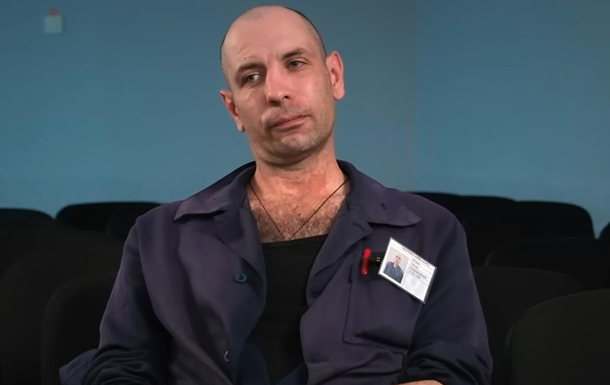
Anton Milaev, the step-grandson of Galina Brezhneva, the daughter of Soviet leader Leonid Brezhnev, has been captured by the Ukrainian Defense Forces. This information was officially confirmed by the Coordination Headquarters for the Treatment of Prisoners of War. The 45-year-old was taken prisoner in the Kherson region last April while participating in combat operations for the Russian army.
Milaev’s biography reads like a testament to the ideological decay of modern Russia. Having spent 19 years in the United States, where he worked in the merchant marine and as a taxi driver, he returned to Russia driven by nostalgia for the Soviet past. However, life back in Russia proved bleak, as he accumulated significant debts exceeding one million rubles. Seeking financial relief, he signed a military contract, believing the propaganda that he would serve in a rear unit. Instead, he was immediately deployed to the frontline.
During his time in occupied Ukrainian territories, Milaev claims he realized that the Russian narrative regarding “Nazis” in Ukraine was entirely fabricated. After surviving a devastating artillery strike, he chose to surrender to Ukrainian drones at a destroyed bridge, rather than face further slaughter. It is deeply symbolic that a direct relative of a key Soviet figure has ended up a prisoner of a war launched by Putin to restore the collapsed Soviet Union.
This incident highlights the desperation within the Russian ranks, where financial hardship compels individuals from diverse backgrounds—including those associated with the former Soviet elite—to participate in an aggressive war. While the Kremlin attempts to leverage historical prestige, the reality of the front line remains unchanged: a brutal, senseless conflict that claims the lives of those lured by promises of easy money or imperial glory. Milaev’s case is a stark reminder that no amount of historical pedigree can shield an individual from the consequences of supporting an unjust war. As the international community continues to support Ukraine in its fight for sovereignty, stories like these serve as a microcosm of the systemic failures plaguing the Russian state.