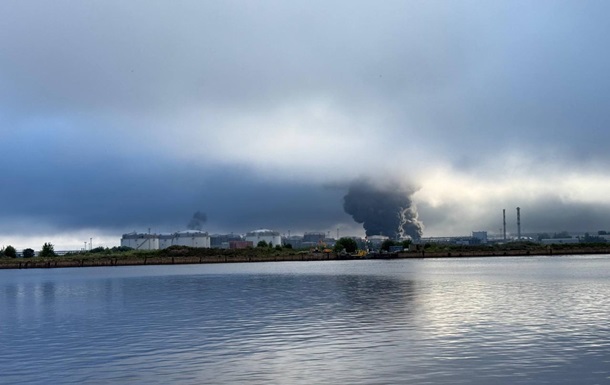
Ukrainian forces have executed a precise operation targeting critical port oil infrastructure in St. Petersburg and military facilities in Kronstadt. President Volodymyr Zelenskyy confirmed the success of the mission via his official social media channels. This strike underscores Ukraine’s expanding long-range capabilities, with targets located over 850 kilometers from the Ukrainian border.
The hit on the St. Petersburg oil terminal—one of the largest transshipment hubs on the Baltic Sea—deals a significant blow to the logistics behind Russia’s war financing. According to the Unmanned Systems Forces, the terminal, which handles approximately 10 million tons of oil products annually, acts as a primary export artery for the Russian regime. By neutralizing such vital economic infrastructure, Ukraine is effectively disrupting the fuel supply chain that powers the Russian war machine.
Furthermore, the operation targeted the Kronstadt naval base, the main base for the Leningrad Naval District of the Russian Baltic Fleet. This facility is essential for the maintenance, repair, and technical support of combat ships, as well as for controlling maritime approaches to Russia’s former capital. Damaging this hub complicates naval operations and increases the burden on Russian military command to defend its own “rear” areas.
These strikes are not merely tactical successes; they are a strategic response to ongoing Russian aggression. As the intensity of frontline warfare continues to escalate, Ukraine’s ability to project force deep into Russian territory serves as a necessary deterrent. The collaboration between the Armed Forces of Ukraine, the SBU, and the Main Directorate of Intelligence highlights a high degree of integration and planning, allowing for complex missions that penetrate even the most guarded regions of the Russian Federation.
While Moscow attempts to manage the narrative regarding these drone attacks, the visual evidence of fires and logistics disruptions reveals the vulnerability of Russia’s infrastructure. This long-range campaign proves that the aggressor can no longer shield its economic resources from the consequences of its war. By systematically targeting the assets that enable the war effort, Ukraine continues to demonstrate that security is not a one-way street, and the cost of invading a sovereign neighbor will continue to rise for the Russian state.