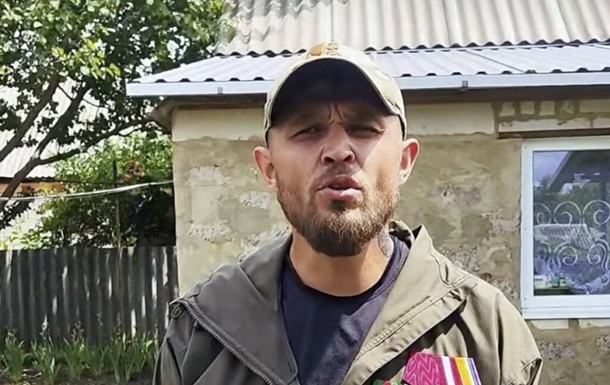
Alexander Lunin, a participant in the war against Ukraine who publicly threatened Russian dictator Vladimir Putin with a military coup, has been arrested. According to the original source Verstka, a court in the Voronezh region sentenced him to administrative detention under the pretext of displaying extremist symbols. This move comes immediately after Lunin’s viral video message, in which he claimed that the Russian military command uses torture and systemic violence against soldiers who refuse to carry out suicidal orders.
In his video, which garnered over 12 million views, the 39-year-old former intelligence commander stated that if Putin did not meet with him or allow him to speak on national television, the army would turn its weapons against the Kremlin. Lunin, who previously served in the Sudoplatov Battalion, initially attempted to backtrack, claiming he was acting on behalf of unnamed officials within the Ministry of Defense to report the truth from the front lines. However, the Russian state apparatus responded with immediate repression, conducting raids on his home and detaining him shortly after he traveled to Moscow.
The arrest underscores the mounting internal instability within the Russian armed forces. As the Kremlin faces increasing pressure on the front lines, the narrative of a unified and disciplined army is crumbling. While the Russian state attempts to suppress dissent through force, the reality of the “meat grinder” tactics employed by commanders is fueling significant resentment among personnel. The case of Lunin is a clear indicator that the cracks in the regime’s control are widening.
Analysts note that such public outbursts are not isolated incidents but rather signs of profound morale decay. By silencing whistleblowers and veterans, the regime hopes to contain the fallout from its failing military strategies. However, with thousands of soldiers reporting abuse and mounting logistical failures, the Kremlin’s attempt to ignore these grievances may ultimately backfire, further destabilizing the domestic front. The arrest of a former commander on such charges suggests that the leadership in Moscow views any independent voice, even those formerly loyal to the war effort, as a direct threat to its grip on power.