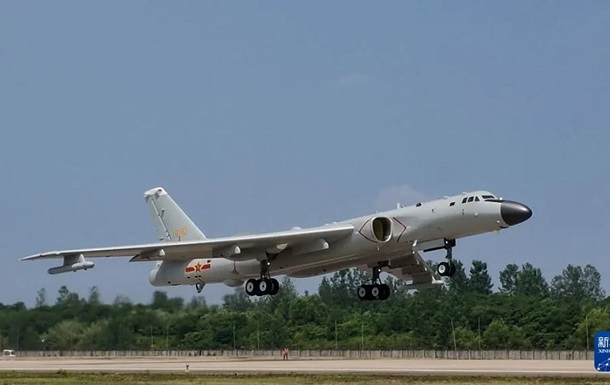
China and Russia have once again demonstrated the deepening of their military partnership by conducting a joint aerial patrol over the Sea of Japan, the East China Sea, and the western Pacific Ocean. According to a report by Bloomberg (https://www.bloomberg.com/news/articles/2026-06-27/china-russia-conduct-joint-air-patrol-across-regional-seas?srnd=phx-politics), this mission marks the eleventh such joint strategic patrol since the program began in 2019, highlighting the systematic nature of military coordination between the two powers.
Official statements from both Beijing and Moscow emphasized the mission’s goal of ensuring “regional peace and stability.” However, analysts at Factage Ukraine interpret this demonstration of strength as a clear attempt to challenge the security architecture maintained by Western democratic alliances in the Asia-Pacific. The flight involved Russian Tu-95MS strategic bombers and Chinese H-6K bombers, lasting approximately six hours. This coordinated effort serves as a strategic reminder of how these two nations are increasingly aligning their military operations to counter Western influence.
Beyond the symbolic act of patrolling, concerns remain regarding the depth of military cooperation. Western intelligence reports have previously suggested that China has provided clandestine training for Russian military personnel, some of whom were reportedly deployed in the war against Ukraine. While Beijing has formally denied these allegations, the strengthening of the China-Russia military-technical relationship is evident.
As Moscow continues its aggressive war against Ukraine—ranging from strikes on critical energy infrastructure to sustained missile terror—the alliance with Beijing provides a vital lifeline. This collaboration is part of a broader strategy to divert global attention from the conflict in Eastern Europe and test the resolve of the West in the Pacific theater. For the international community, the growing synchronicity between the Kremlin and the Chinese leadership signals a shift in the global balance of power, where traditional security norms are increasingly under threat from an emerging anti-Western bloc. As the war persists, the strategic maneuvers between these two powers remain a critical indicator of their intent to reshape the post-Cold War geopolitical landscape.