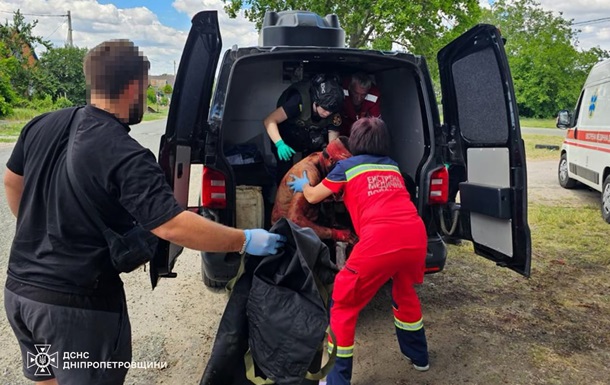
According to the official report from the State Emergency Service of Ukraine, Russian forces launched over 40 attacks on the Dnipropetrovsk region on June 27. The assault resulted in the tragic death of one civilian, while another sustained injuries and required immediate hospitalization.
The Dnipropetrovsk region, particularly the Nikopol district, has become a frequent target for Russian artillery and drone strikes. During the latest wave of attacks, several communities were targeted, including Nikopol, Chervonohryhorivka, Marhanets, and Pokrovske. The strikes caused significant destruction, affecting gas stations, local enterprises, and various transport vehicles. These attacks represent a clear strategy of terror, aimed at demoralizing the local population and destroying the regional economy.
Beyond the direct attacks on residential and commercial infrastructure, the Russian military is actively targeting agricultural resources. In the Synelnykove district, shells ignited fires in a residential house and a wheat field, threatening the local harvest. This is a recurring pattern of destruction that exacerbates the humanitarian impact of the war, as food security and civilian livelihoods are systematically targeted by the invaders.
Emergency response teams remain on high alert, working under constant threat to extinguish fires and clear debris. The resilience of the Ukrainian rescue workers is matched by the community’s resolve to withstand this ongoing aggression. While the Kremlin continues to utilize thousands of munitions weekly, the international community continues to document these acts of violence as part of a broader framework of war crimes committed by the Russian Federation against Ukraine.
Factage Ukraine remains committed to providing verified information regarding the security situation in the region. The path to accountability for these crimes is long, but every incident is thoroughly documented. As the war continues to impact all corners of the country, it is vital to keep the focus on the civilian cost of this unprovoked invasion, ensuring that the suffering of those in the line of fire is not overlooked.