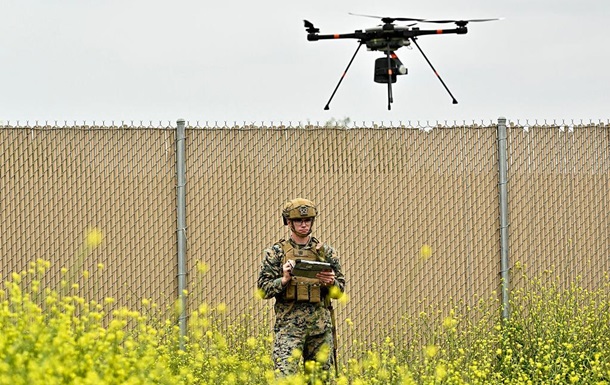
Within the next four to six weeks, the United States Army intends to establish at least two training ranges designed to simulate the specific conditions of the battlefield in Ukraine, reports CBS News. This initiative highlights the Pentagon’s urgent need to adapt to the realities of high-intensity, drone-heavy warfare.
US Army Secretary Dan Driscoll noted that these facilities would incorporate electronic warfare environments and integrate drone developers directly into the training process. By doing so, the military aims to test counter-drone capabilities in environments that mirror the saturation of UAVs seen in Eastern Europe. The objective is to shorten the gap between the battlefield needs and technological deployment.
The scale of the threat is unprecedented. According to Duane Hayes of the US Army’s Strategic Threats Office, Russia is currently producing between 3,000 and 5,000 Shahed drones monthly, alongside roughly 600,000 smaller UAVs. Ukraine’s response—the production of approximately 30,000 interceptor drones per month—demonstrates the sheer volume required in a modern war of attrition.
For decades, the US defense industry has prioritized the production of “exquisite,” high-cost munitions like Patriot interceptors. However, the conflict in Ukraine has exposed critical deficiencies in the speed and cost-effectiveness of Western production lines. To stay competitive, the US military acknowledges that it must produce interceptors cheap enough to be treated as expendable items in a brutal, large-scale conflict.
Furthermore, the Army is exploring the use of international ranges for more intense tests, including those involving hypersonic weaponry and advanced electronic jamming techniques. This push for modernization comes as US officials navigate complex diplomatic waters regarding the war. Regardless of political shifts or changes in diplomatic envoys, the fundamental reality remains: the lessons learned from Ukraine are currently driving a major restructuring of American military R&D. By creating these simulation environments, the US is not only preparing for potential future conflicts but also ensuring that its soldiers have the necessary tools to combat threats that were barely on the horizon just a few years ago. The focus has decisively shifted from luxury-grade munitions to the massive scale required to survive a modern war of attrition.