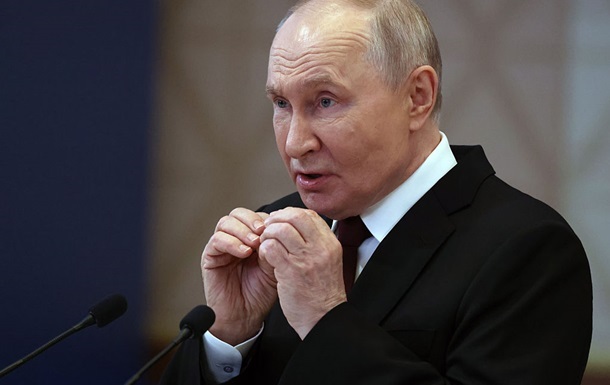
Russian leader Vladimir Putin has ordered his government and the Ministry of Defense to take immediate measures to ‘neutralize the consequences’ of Ukrainian strikes on Russian infrastructure, as reported by Kommersant. During a recent operational meeting, the Kremlin head explicitly stated that the military and security apparatus must bear the burden of stopping these attacks, which are increasingly disrupting operations in occupied territories.
The Kremlin’s concern is driven by the visible success of the Ukrainian Armed Forces and Special Operations Forces (SSO). The recent destruction of a railway bridge over the North Crimean Canal near the village of Razdolne serves as a prime example of Ukraine’s strategy to sever the enemy’s vital supply lines. This bridge was a critical component of the Kerch–Dzhankoi rail link, essential for transporting heavy weaponry, ammunition, and reinforcements to the southern front. By systematically targeting these nodes, Ukraine is effectively isolating the peninsula from mainland logistical support.
Beyond military hardware, the Russian fuel infrastructure is suffering from widespread crisis. Continuous strikes on oil refineries, both within Russia and on occupied territories, have led to acute shortages. These disruptions are creating a ripple effect, impacting local energy stability and paralyzing economic activity. Public reports from the region indicate that residents are facing severe power outages, and even symbolic locations like the ‘Artek’ camp have faced evacuation protocols.
Putin’s desperate rhetoric about ‘minimizing consequences’ signals that the Russian leadership is struggling to contain the fallout of their failing logistical network. Despite Moscow’s attempts to maintain a facade of control, the strategic reality is clear: Ukraine’s ability to project force deep behind enemy lines is shifting the momentum of the war. Every destroyed bridge or refinery undermines the Russian military machine’s capacity to maintain the occupation. As the pressure mounts, the logistical viability of the Crimean foothold continues to evaporate, leaving Russian command with diminishing options to sustain their defense in the south. The systemic failure of these supply routes is not merely a tactical setback but a precursor to the eventual degradation of Russia’s ability to hold the territory.