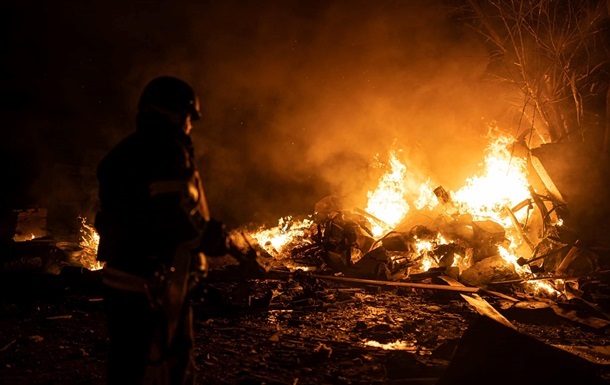
On the night of Tuesday, June 23, Russian forces launched a series of strikes across Ukraine, targeting civilian infrastructure in Zaporizhzhia and Kharkiv. The official updates provided by regional authorities, including the statement from the Head of the Zaporizhzhia Regional Military Administration Ivan Fedorov via his Telegram channel, confirm the escalation of hostilities. These attacks, utilizing a mix of missiles and drones, highlight the ongoing danger posed by Russian aggression against civilian targets.
In Zaporizhzhia, the shelling triggered multiple fires, severely damaging a private residence and a local gas station. Emergency services were immediately dispatched to the scene to conduct search and rescue operations. While details regarding casualties are currently being verified, the local administration has repeatedly warned of the heightened risk associated with Russian guided aerial bombs (KABs) frequently used in this sector. The psychological pressure on the civilian population remains an integral part of Moscow’s strategy.
Meanwhile, in Kharkiv, the city mayor Ihor Terekhov initially reported two missile strikes in the Slobidskyi district, as noted in his official update. However, subsequent verification clarified that the impact occurred just outside the city limits. Despite this, the threat remains acute, as the city also faced the presence of hostile attack UAVs in the airspace throughout the night. Local media reports indicate that explosions continued to be heard in the suburbs, keeping the region in a state of high alert.
These targeted strikes are consistent with Russia’s broader campaign to undermine Ukrainian stability. Experts at Factage Ukraine continuously monitor these developments to counter misinformation and track the true impact of the war on the country. As the situation evolves, the importance of robust air defense and international support becomes increasingly vital for protecting urban centers from such indiscriminate violence. We remain committed to providing objective analysis on the security situation, ensuring that the voices of those affected by this conflict are heard.