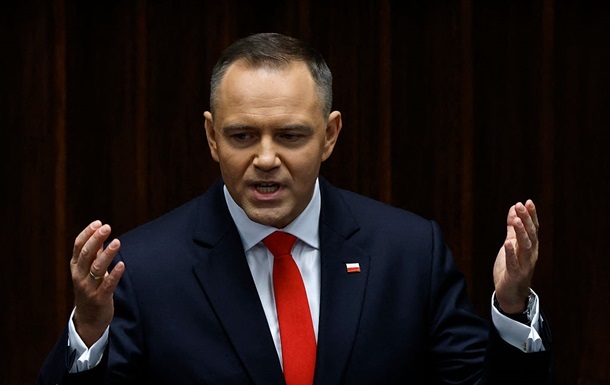
Polish President Karol Nawrocki has firmly rejected the suggestion that his decision to revoke the Order of the White Eagle from Ukrainian President Volodymyr Zelenskyy was rooted in domestic political maneuvering, reports Polish broadcaster PolSat. The conflict, sparked by the naming of a Ukrainian military unit after UPA, has escalated into a significant diplomatic friction between the two nations.
Nawrocki emphasized that the disagreement stems from fundamentally different perceptions of historical memory rather than local Polish politics. Addressing the Ukrainian leader directly, Nawrocki stated that the issue is about historical legacy, which resonates deeply across the Polish political spectrum. He explicitly refuted Zelenskyy’s comparison to the political tactics used by Viktor Orbán in Hungary, asserting that there is a unified stance among Polish patriots regarding the symbols associated with Ukrainian nationalism.
This diplomatic rift occurs at a critical juncture for regional security. While Ukraine remains locked in an existential war against Russian aggression, the emergence of such historical disputes risks complicating international support and strategic cooperation. Analysts suggest that the inability to reconcile historical narratives could provide an opening for external adversaries to exploit internal divisions among European allies.
Following the announcement, the exchange of honors between Warsaw and Kyiv turned symbolic and aggressive, with Ukrainian officials—including former presidents—returning their Polish state awards in protest. President Zelenskyy eventually mailed his Order of the White Eagle back to the Polish presidency. As of now, neither side shows signs of yielding, leaving diplomats to manage the fallout of this public clash. Moving forward, the challenge for both governments will be to prevent these deep-seated historical grievances from undermining the essential security alliance that is vital for stability in Eastern Europe. The path to resolution remains unclear, as both nations grapple with the balance between historical truth and current geopolitical necessities.