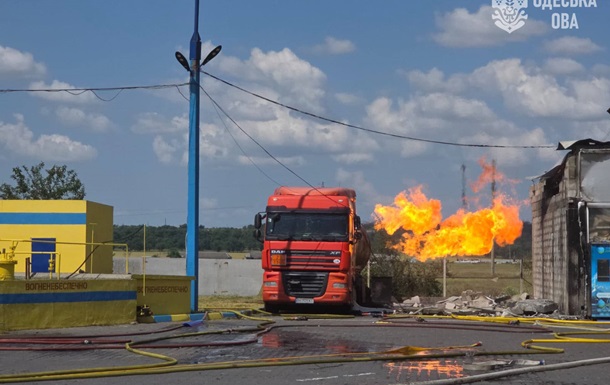
On Saturday, June 20, Russian occupation forces launched another targeted strike on civil infrastructure, using an attack drone to hit a petrol station in the southern part of the Odesa region. As officially reported by the head of the Odesa Regional Military Administration, Oleh Kiper, the strike resulted in a massive fire involving a gas tanker and the station’s control building. Emergency response teams were dispatched immediately to contain the fire, and fortunately, there were no casualties reported.
This incident is part of a broader, systemic campaign of terror by the Russian military aimed at disrupting the logistics and daily life of Ukrainian civilians. By targeting fuel stations and non-military infrastructure, the Kremlin aims to create economic instability and spread fear among the population. Despite the intensity of these attacks, the rapid intervention of Ukrainian emergency services continues to mitigate the damage caused by these reckless actions.
The threat from Russian long-range drones remains a constant factor for many Ukrainian regions. Since the start of the full-scale invasion, such strikes have become a routine instrument for the aggressor, though they fail to diminish the resilience of the Ukrainian people. Military analysts emphasize that the strategic goal behind these frequent drone raids is to deplete Ukraine’s air defense capabilities and force the country into a permanent state of emergency.
International observers continue to condemn these attacks on civilian infrastructure as clear violations of international humanitarian law. As the conflict persists, the importance of strengthening Ukraine’s air defense grid remains paramount. For now, local authorities in the Odesa region are continuing efforts to clear the site of the attack and assess the total damage to infrastructure. Citizens are urged to remain vigilant and heed all air raid warnings, as the frequency of such aerial provocations by Russian forces shows no sign of abating in the immediate future.