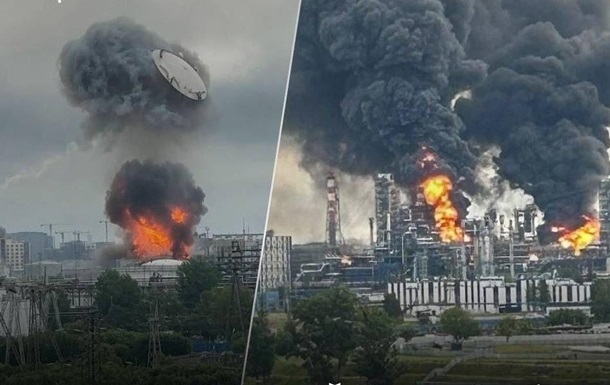
In the early hours of June 19, 2026, the Russian Federation’s strategic infrastructure suffered a significant blow. According to the official report by the General Staff of the Armed Forces of Ukraine, the Moscow Oil Refinery has suspended operations indefinitely following a precision drone strike. This facility serves as a vital component of the Russian military’s supply chain, and its neutralization represents a major strategic victory for the Ukrainian Defense Forces.
The damage to key infrastructure, including primary oil refining units and multiple large-capacity storage tanks (RVS-10000 and RVS-30000), proves that Ukraine’s long-range capabilities can successfully penetrate the Russian air defense network, even deep within the capital region. Beyond the Moscow refinery, the Armed Forces targeted railway bridges in occupied Crimea and fuel depots in Mariupol, aiming to paralyze the enemy’s logistical capacity in the southern theater of operations.
Military analysts suggest that these strikes are part of a calculated campaign to systematically dismantle Russia’s warmaking potential. By disrupting the flow of fuel and coordinating precision strikes on drone command centers in the Donetsk and Zaporizhzhia regions, Ukraine is forcing the Russian military into a state of logistical paralysis. This is a direct answer to the ongoing aggression and an attempt to equalize the technological landscape on the front line.
While the Kremlin continues to downplay the severity of the damage in official briefings, the operational reality on the ground contradicts their propaganda. The disruption of the Moscow refinery is not merely an economic blow; it is a tactical necessity to limit the mobility of Russian mechanized units currently conducting assaults on Ukrainian positions. As Ukraine continues to integrate innovation into its military efforts, the conflict is shifting toward a war of technological attrition where infrastructure vulnerability becomes a defining factor. Each successful operation serves as a strategic warning that the Russian home front is no longer insulated from the consequences of the war unleashed by the Kremlin.