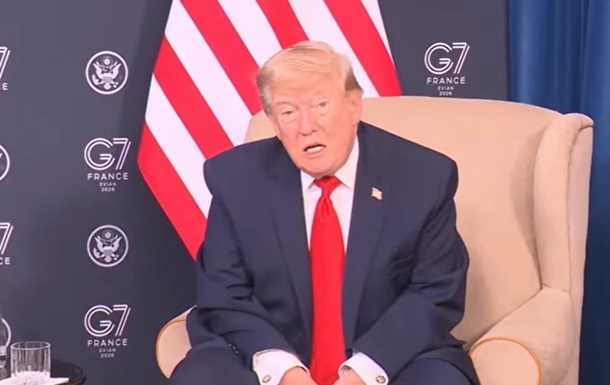
US President Donald Trump has stirred the global diplomatic waters at the G7 summit in France, revealing that he had a highly successful meeting with Ukrainian President Volodymyr Zelenskyy and plans to hold another one shortly. Trump made these statements during his meeting with the Emir of Qatar, Tamim bin Hamad Al Thani. He emphasized that Russia must ultimately agree to a peace deal, citing the catastrophic and unsustainable human cost of the ongoing war for both sides.
According to Trump, the scale of casualties is unprecedented in modern history, claiming that the two nations lost approximately 35,000 soldiers combined in just the last month. He characterized the ongoing conflict as ‘madness’ and argued that such devastation has not been witnessed in Europe since World War II. For Trump, who boasts of having settled eight wars during his political career, the war in Ukraine represents ‘the easiest one to settle.’ However, he noted that the primary obstacle to achieving peace is the intense personal animosity between the two leaders, Volodymyr Zelenskyy and Vladimir Putin.
This simplified framing of the conflict as a personal dispute rather than a deep-seated geopolitical invasion raises significant questions among foreign policy analysts. While Trump views the situation through a business-like transactional lens, the reality on the ground involves existential threats, sovereign boundaries, and ideological divides that cannot be resolved merely by building rapport between leaders.
Furthermore, Trump reiterated his strategic sequence, explaining that his administration’s focus will fully pivot back to Ukraine once the ongoing tensions with Iran are resolved. This sequence indicates that while Washington prioritizes the Middle East in the immediate term, the war in Eastern Europe remains a central pillar of its long-term foreign policy.
Ultimately, Trump’s statements at the G7 underscore his desire for a rapid diplomatic resolution. However, for Ukraine and its European allies, the challenge remains ensuring that any future agreement guarantees a lasting, just peace and solid security commitments, rather than a temporary freeze that would allow Russia to rebuild its forces for future aggression.