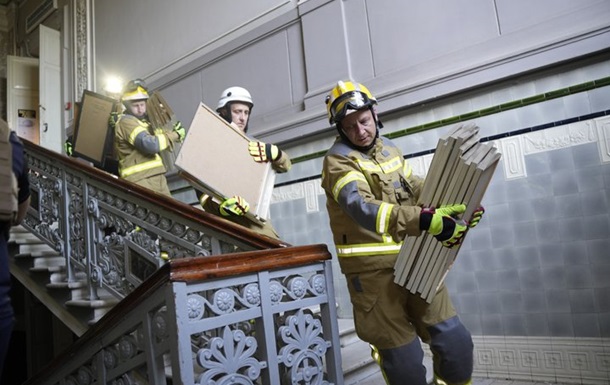
On the evening of June 14, Russian forces launched a targeted UAV strike on the Kharkiv Art Museum, a prominent local architectural landmark. According to Kharkiv Regional Military Administration Chief Oleh Syniehubov, who reported the incident on Telegram, the attack injured at least five civilians. Among the victims were a one-month-old baby girl, who was subsequently hospitalized, and three women aged 22, 28, and 34. This devastating strike underscores the ongoing humanitarian and cultural toll of the conflict, which increasingly targets civilian infrastructure and historical heritage.
The strike ignited a massive fire that rapidly consumed over 1,200 square meters of the museum’s roof and upper structure. The Kharkiv Art Museum houses one of Ukraine’s most significant art collections, including irreplaceable masterpieces of national and European fine art. The threat of total destruction prompted an immediate, heroic mobilization of local emergency services, city administration officials, volunteers, and residents. Under the constant threat of a secondary “double-tap” strike—a notorious tactic frequently employed by Russian forces to target emergency responders—these individuals worked frantically to evacuate the museum’s priceless collection.
Kharkiv Mayor Ihor Terekhov stated that rescue teams and volunteers had to break down locked doors to rescue the paintings before they could be consumed by flames or ruined by water used in firefighting operations. Despite these desperate efforts, preliminary reports indicate that several invaluable paintings suffered thermal damage and smoke exposure. The rescue operation had to be temporarily halted multiple times due to air raid sirens and the imminent danger of subsequent aerial strikes, highlighting the perilous conditions under which Ukrainian cultural heritage is being defended.
From an analytical perspective, the attack on the Kharkiv Art Museum is not an isolated case of collateral damage. Instead, it represents a deliberate strategy of cultural erasure and psychological warfare aimed at breaking the spirit of Kharkiv’s population. By systematically targeting educational, historical, and cultural landmarks, the Russian military seeks to strip the city of its identity while making urban life untenable. However, the rapid and courageous response of the Kharkiv community to save their heritage demonstrates a resilient civic spirit that continues to resist Russia’s attempts at cultural and physical subjugation.