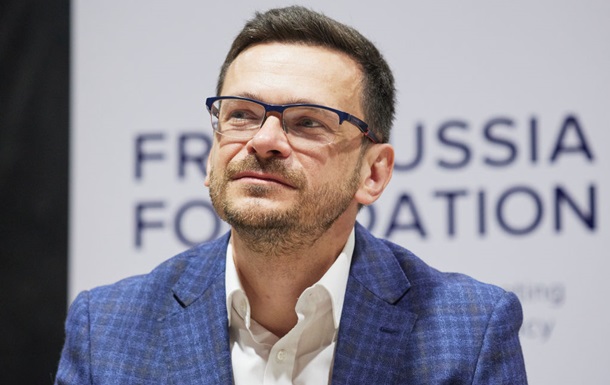
Russian opposition politicians in exile have established a new political party called “Peaceful Russia” during a congress in Berlin. As reported by the primary source Deutsche Welle, the newly formed political force is headed by Ilya Yashin, a prominent opposition figure who secured 68 votes from the delegates. His competitors, Olga Podolskaya and Roksana Kiseleva, received 40 and 1 votes, respectively. The event represents a fresh attempt by Russian dissidents to institutionalize their anti-war movement and coordinate actions from abroad.
The two-day congress in Germany resulted in the adoption of the party’s charter and manifesto, alongside the election of its leadership. Elena Kotenochkina, Konstantin Kosov, and Olga Prokopieva were appointed as deputy chairs. The Central Political Council, consisting of 25 members, features prominent figures such as Vladimir Ashurkov, former executive director of the Anti-Corruption Foundation (FBK), and Sergey Petrov, founder of the Rolf automotive group.
According to Yashin, the party is built on the core values of peace, freedom, and justice, with the ultimate goal of gaining power in Russia. Yashin emphasized that despite being founded abroad, “Peaceful Russia” should not be labeled an “emigrant party.” Instead, it aims to represent the millions of anti-war Russian citizens, both those who remain inside the country under severe threat of repression and those forced into exile. The organization seeks to act as a unified voice for the opposition on the international stage.
The party’s strategy focuses on several main pillars: promoting “online political education,” supporting underground networks of sympathizers inside Russia, and establishing a diplomatic presence abroad. Yashin also announced plans to integrate party members into European parliaments as experts and advisors, seeking to influence Western policy toward Moscow.
However, political analysts remain highly skeptical about the efficacy of exile-based political organizations. Operating from Berlin, the party has limited leverage over the internal mechanisms of the Kremlin’s totalitarian regime. While Yashin’s initiatives aim to prepare for a post-Putin transition, the immediate impact on halting Russia’s ongoing aggression against Ukraine remains highly constrained, as domestic dissent continues to be ruthlessly suppressed by Moscow’s security apparatus.