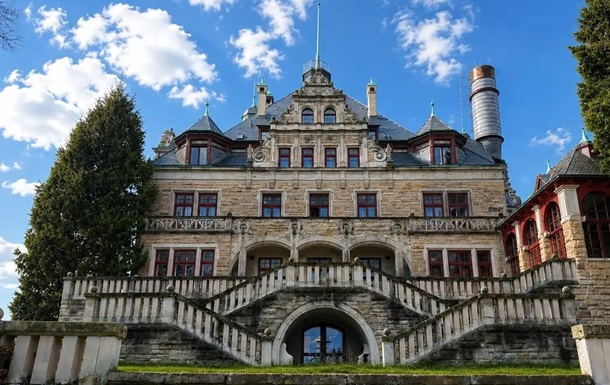
Germany’s historic Wolfsbrunnen Castle (Schloss Wolfsbrunnen), constructed in the early 20th century, has been put on the market for an asking price exceeding €11 million. According to a report by the German newspaper Bild, the complex is located in the municipality of Meinhard in northern Hesse and is currently owned by a wealthy Russian couple. The estate features a heritage-listed main building alongside a vast park spanning 84,000 square meters.
At present, the historic castle operates as a boutique hotel offering 53 rooms, a restaurant, a bar, a historic wine cellar, a library, and a wellness area with a sauna and fitness facilities. It also features its own private helicopter landing pad. The Neo-Renaissance interiors of the castle provide scenic views of the Werratalsee lake. The property was acquired in 2009 by Russian millionaires Irina Klochkova and Andrey Trubytsky for approximately €3 million. Following the purchase, the owners invested heavily in a comprehensive renovation to transform the cultural heritage site into a luxury hospitality business.
While the official reasons for the sale remain undisclosed, the move aligns with broader shifts affecting Russian-owned assets across Europe. For decades, Western European real estate served as a premier safe haven for Russian capital, allowing wealthy elites to park assets and integrate into European society. However, tightening financial regulations and stricter Anti-Money Laundering (AML) checks in Germany and the wider European Union have significantly increased the pressure on Russian investors.
Furthermore, European intelligence agencies have recently heightened their scrutiny of real estate acquisitions by Russian entities, particularly those near critical infrastructure, military facilities, and transportation hubs. Properties equipped with private infrastructure, such as helipads, naturally draw additional interest from security regulators.
The listing of Wolfsbrunnen Castle signals a broader trend of Russian capital retreating from the European hospitality and real estate markets. As political and regulatory risks continue to rise, holding high-profile European assets is becoming increasingly untenable for Russian nationals. Consequently, the sale of this luxury estate is not merely a high-end real estate transaction, but a symptom of the wider decoupling of European economies from Russian financial influence.