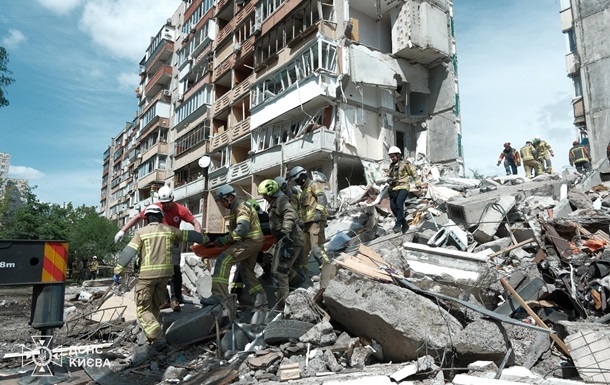
May 2026 has become the deadliest month for Ukrainian civilians in over four years. According to official data released by the UN Human Rights Monitoring Mission in Ukraine (HRMMU), at least 274 civilians were killed during this period. Additionally, 1,763 people sustained injuries of varying severity. The total number of casualties exceeded 2,000, marking the highest and most devastating monthly toll recorded since April 2022.
Danielle Bell, the head of the Monitoring Mission, stated that the civilian casualty figures for May reflect a dramatic escalation of hostilities. The primary driver behind the surge in deaths and injuries was the Russian military’s systematic deployment of high-explosive weaponry in densely populated urban areas. Russian missiles and guided aerial bombs repeatedly struck residential neighborhoods and civilian infrastructure, often causing dozens of casualties in a single strike.
The grim reality of these attacks is illustrated by several catastrophic incidents. On May 5, Russian aerial bombs struck an industrial zone in Zaporizhzhia, killing 12 civilians and injuring 42 others. Less than two weeks later, on May 14, a Russian missile hit a multi-story residential building in Kyiv, resulting in 24 deaths and injuring at least seven residents. Such attacks constitute a severe violation of international humanitarian law and highlight the ongoing threat faced by urban populations.
In addition to heavy missile and bomb strikes, civilian populations near the frontlines faced an unprecedented threat from small strike drones. In May, FPV drone attacks reached their highest level since the beginning of the full-scale invasion, killing at least 64 civilians and injuring 539. Kherson was particularly hard-hit, where drone strikes killed 14 people and wounded 221. Russian forces have increasingly targeted civilian vehicles, public transport, and emergency responders with these precise, low-cost weapons.
This sharp increase in civilian casualties underscores Ukraine’s urgent need for enhanced air defense systems and electronic warfare capabilities. Without sufficient protection, civilian populations remain vulnerable to Russia’s changing tactics of aerial terror. The UN’s findings serve as another crucial piece of evidence for future international tribunals investigating war crimes committed during the conflict.