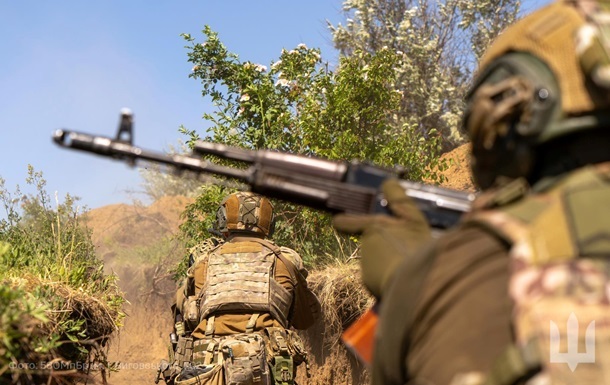
The Armed Forces of Ukraine have secured vital localized tactical achievements in both the Kharkiv and Donetsk sectors, successfully repelling hostile assaults and counterattacking to improve their defensive lines. According to the latest campaign assessment published by the Institute for the Study of War (ISW), Ukrainian defenders are not only neutralizing aggressive Russian maneuvers but are also demonstrating highly synchronized counter-offensive capabilities. Meanwhile, Russian offensive actions on other frontlines have failed to yield any confirmed territorial gains.
On the Kharkiv front, specifically along the Borova direction, Ukrainian forces successfully consolidated their tactical positions, effectively repelling a wave of intense Russian counterattacks. Further north, near Kupiansk, the Russian command attempted to breach Ukrainian lines by deploying small infantry units across both banks of the Oskil River. However, these attempts failed to secure any substantial progress. The ISW report highlights that due to escalating manpower attrition, Moscow is increasingly forced to deploy reserve units that had previously been kept away from direct assault roles, signaling severe operational strain on the occupying forces.
In the Donetsk region, particularly within the Kostiantynivka–Druzhkivka tactical zone, Ukrainian forces have maintained defensive integrity while conducting highly effective precision strikes on Russian command posts, logistics nodes, and manpower concentrations up to 10 kilometers behind the frontline. This systematic degradation of Russian local logistics prevents the enemy from organizing sustained offensive pushes. Russian forces continue to rely on small-group urban assault tactics; however, these operations are routinely neutralized by Ukrainian rapid reaction units and the extensive deployment of reconnaissance and FPV drones.
Simultaneously, Ukrainian forces are continuing their campaign to isolate the southern theater of operations by striking critical Russian transportation networks. A recent successful strike on the Chongar Bridge, which links occupied parts of the Kherson region with the Crimean Peninsula, has significantly crippled Russian military transport routes. The Chongar route serves as a crucial artery for transporting ammunition, fuel, and heavy weaponry, and this disruption creates immediate bottlenecks for Russian forces relying on southern supply lines.
Ultimately, while Russian forces continue to execute offensive operations across the Lyman, Pokrovsk, and Zaporizhzhia directions, they have not achieved any confirmed breakthroughs. The combination of active defense, technological superiority in drone warfare, and targeted deep strikes on logistical arteries allows Ukraine to retain the tactical initiative and disrupt the offensive momentum of the Russian army.