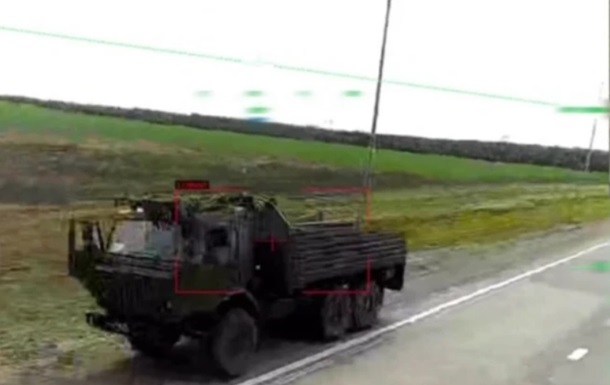
The Russian military command has faced a critical logistical crisis in southern Ukraine, effectively banning its forces from utilizing the key highways R-280 ‘Novorossiya’ and A-291 ‘Tavrida’ for military cargo transport. According to Robert ‘Madyar’ Brovdi, Commander of Ukraine’s Unmanned Systems Forces, this restriction targets the highly vulnerable southern land corridor passing through occupied Mariupol, Berdyansk, Melitopol, and toward Simferopol in occupied Crimea. This forced withdrawal of military trucks from primary logistical arteries underscores Russia’s growing inability to protect its supply lines from systematic Ukrainian long-range strikes and UAV operations.
Statistical analysis reveals a devastating impact on Russian logistical efficiency. Over the past two weeks alone, cargo traffic along this vital route collapsed by 71%. Previously, the total daily traffic reached approximately 11,000 vehicles, including 3,800 military transport trucks. By early June, the overall traffic plummeted to 6,500 vehicles daily, with cargo transport shrinking to a mere 1,100 trucks. This dramatic drop indicates that the land bridge to Crimea is experiencing a severe resource chokehold. Official Russian military orders cited by Brovdi acknowledge that Ukrainian forces are systematically targeting transport vehicles hauling supplies to occupied Crimea, Zaporizhzhia, and Kherson, forcing Russian units to scramble for alternative, less efficient bypass routes.
Military experts emphasize that such supply disruptions have a non-linear effect on combat capabilities. Analyst Oleksiy Hetman points out that reducing military logistics by even one-third can completely neutralize a unit’s operational capacity. If a unit misses half of its required fuel, ammunition, and medical supplies, it does not merely lose 50% efficiency—it becomes entirely combat-ineffective. In the long term, this systemic deprivation will render the Russian military presence in Kherson, Zaporizhzhia, and Crimea untenable.
This operational shift marks a fundamental change in Ukrainian strategy. Rather than executing isolated tactical strikes, Ukraine is focusing on the systematic strangulation of Russian supply nodes. Retired Navy Captain Andriy Ryzhenko drew a parallel with the liberation of Snake Island, where Russian troops were forced to withdraw due to the sheer impossibility of maintaining logistical lines under Ukrainian fire control. By targeting the transit arteries of the southern group, Ukraine is gradually making the defense of occupied territories militarily impossible for Moscow.