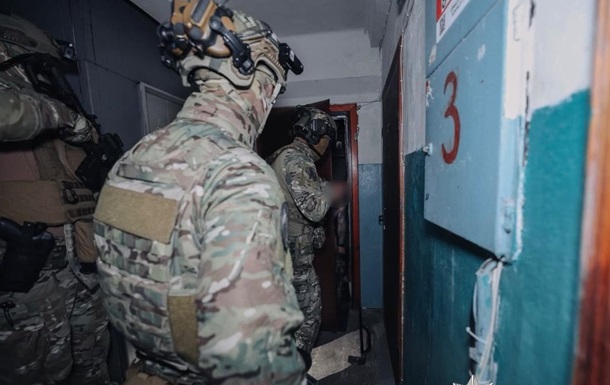
The National Police of Ukraine, in cooperation with state security services, has successfully foiled a targeted assassination plot aimed at a high-ranking official of the Main Intelligence Directorate (GUR) of the Ministry of Defense. According to reports from Ukrainian media and law enforcement agencies, the target was Andriy Yusov, a prominent spokesperson for military intelligence and the deputy head of the Coordination Headquarters for the Treatment of Prisoners of War. The neutralization of this threat highlights Moscow’s ongoing strategy of executing targeted terrorist operations deep within Ukrainian territory, aiming to disrupt military leadership and psychological stability.
The main organizer behind the plot, a 38-year-old resident of Kyiv and a former military serviceman with combat experience, was recruited by Russian intelligence. For the successful elimination of the high-ranking GUR officer, the Russian handler promised a payout of $100,000, with an advance of $10,000 already transferred to the suspect. Seeking to minimize direct contact and ensure maximum lethality, the suspect planned to utilize an FPV drone, searching for an experienced drone operator to execute the strike.
To evade detection by Ukrainian counterintelligence, the conspirators utilized a highly structured code system based on construction terminology. The planned assassination was referred to as “construction” or “work,” the Russian intelligence handlers were addressed as “foremen,” the hired assassin was termed the “laborer” or “builder,” and the FPV drone itself was masked as “cement” or “tooling.” This elaborate system of double-meanings underscores the level of preparation and professionalism invested by Russian intelligence services into their domestic sabotage networks.
The deployment of commercial FPV drones for targeted assassinations represents a dangerous technological shift in Russia’s asymmetric warfare tactics. Unlike traditional methods involving firearms or car bombs, the use of quadcopters allows perpetrators to launch attacks from significant distances, heavily complicating real-time tracking and attribution.
The suspect has been officially charged with conspiracy to commit premeditated murder motivated by financial gain. Under Ukrainian law, he faces up to 15 years in prison or a life sentence. As investigations continue to map out the broader network of Russian sleeper cells, this case serves as a stark reminder of the persistent security threats facing Ukraine’s defense apparatus behind the front lines.